Basilica of Our Lady of Snows, Pallippuram

Basilica of Our Lady of Snows, Pallippuram

Our Lady of Snows Basilica is also known as Manju Matha Basilica

Type
Basilica
Country
India
Scroll
01At a Glance

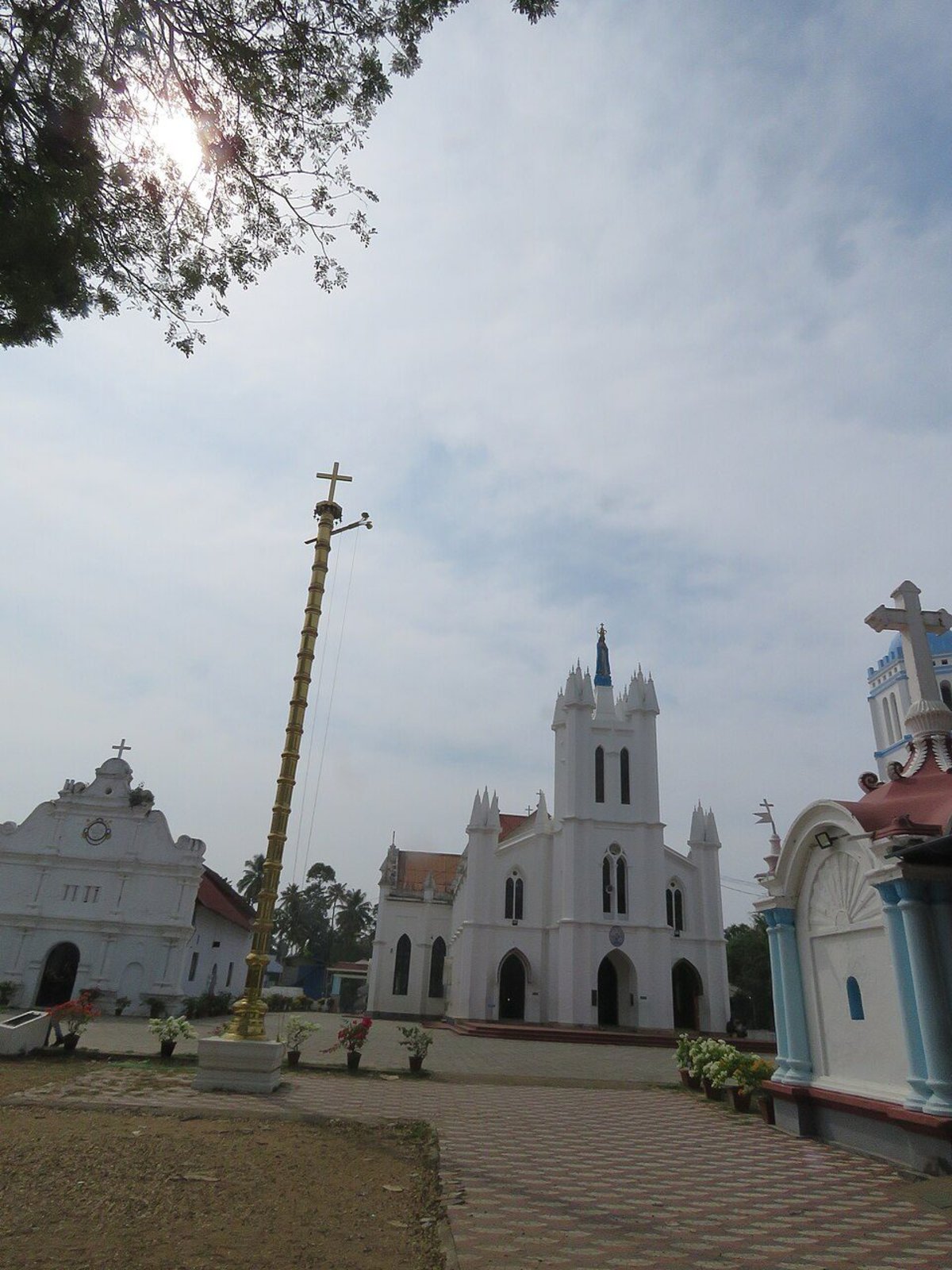
The origins of the Pallippuram church or the Basilica of Our Lady of Snows can be traced back to 1503. The Portuguese built a fort at Pallippuram to serve as a watchtower. It is the oldest existing European fort in India today. There existed a sizeable Christian community in Pallippuram, a result of the missionary efforts of St Thomas the Apostle. A small chapel was built within the fort premises soon after, to cater to the Christian community living in the vicinity and for the Portuguese working at the Pallippuram Fort. By 1557 the Pallippuram church was brought under the Diocese of Cochin, after which it was made a parish in 1577. In 1789, Tippu Sultan the ruler of Mysore attacked the princely state of Travancore. His troops crossed the River Chalakudy and had camped on its banks intending to attack the church at Pallipuram. Tippu had by this time, gained a reputation for dealing harshly with Christians and Hindus during his campaigns. He had razed several of their places of worship to the ground. Fearing for their safety, the Christians in the Vypin area fled to the Pallippuram church and prayed for the intervention of our Lady. Local tradition has it that a thick mist enveloped parts of the island in answer to their prayers. At about the same time a flash flood occurred in the River Periyar in which Tippu lost many men. Confusing the mist to be a part of the Arabian Sea, the invading army which by now had depleted numbers, retreated northwards to Mysore. From then on the church came to be known locally as ‘Manju Matha’ or Our Lady of Snows. The annual feast of the Basilica is held on the 5th of August each year. A major renovation of the church began in 2006 and was completed in time for its 500th anniversary celebrations in 2007. The church was elevated to the status of a Basilica by Pope Benedict XVI on 27th August 2012. It was a befitting tribute to a church that had survived various twists in its long history and had risen from a small chapel to be a major centre of pilgrimage in the region.

1

The Portuguese built a fort at Pallippuram to serve as a watchtower

2

It is the oldest existing European fort in India today

3

There existed a sizeable Christian community in Pallippuram, a result of the missionary efforts of St Thomas the Apostle

4

A small chapel was built within the fort premises soon after, to cater to the Christian community living in the vicinity and for the Portuguese working at the Pallippuram Fort

5

The annual feast of the Basilica is held on the 5th of August each year

02Plan Your Visit
Getting There
Pallippuram, Ernakulam District, Kerala 683541

Pallippuram is in the Ernakulam District of Kerala, accessible from Kochi. By road from Ernakulam city: approximately 30–40 minutes. Local buses and autos connect Pallippuram to Aluva and North Paravur.

Open in Google Maps →
IST (UTC+5:30)
--:--:--

The feast of Our Lady of Snows (August) is the major pilgrimage time. The Syro-Malankara liturgy is celebrated in the West Syriac rite — visitors from other Christian traditions will find the liturgy and vestments distinctively Eastern.

Opening Hours
Basilica6:00 AM - 7:00 PM daily
03Must See

What to seek out, and why it matters

I
From the approach road

The Basilica and Kerala Landscape

The basilica, set within the green Kerala landscape of coconut palms and paddy fields, presents the characteristic combination of Indian Christian architecture and tropical scenery that defines pilgrimage in central Kerala. The white walls and tower of the basilica are visible from the surrounding area.

II
Inside the basilica

The Syro-Malankara Qurbana

Attending the Qurbana — the Eucharistic liturgy of the West Syriac rite as celebrated by the Syro-Malankara Catholics — is the primary spiritual experience at Pallippuram. The liturgy uses Syriac (the language of the ancient Antiochene church), Malayalam, and distinctive vestments and gestures that reflect centuries of Eastern Christian tradition.

III
Main altar

The Shrine of Our Lady of Snows

The image of Our Lady of Snows, venerated in the tradition brought from the Portuguese devotion and adapted into the Malankara Catholic context, is the devotional focus of the basilica. The combination of a Roman Catholic Marian title with an Eastern Catholic liturgical tradition illustrates the rich complexity of Indian Christianity.

IV
Basilica grounds

The Compound and Gardens

The basilica compound includes gardens and an atmosphere of monastic quiet that reflects the Syro-Malankara tradition's emphasis on contemplative religious life. Archbishop Ivanios himself was deeply influenced by Gandhian ideals of simplicity and ashram spirituality — the compound reflects this heritage.

V
Around the basilica

The Community Life of the Malankara Diocese

The diocese centred on Pallippuram has its own seminary, schools, and social works. Visiting the basilica gives a sense of the living community — a small but spiritually serious Church that has preserved its Eastern liturgical identity while maintaining full communion with Rome for nearly a century.

04Masses & Events
Sunday Qurbana8:00 AM

The Syro-Malankara Qurbana — the West Syriac Eucharistic liturgy

Feast of Our Lady of SnowsAugust 5

The principal feast of the basilica

ChristmasDecember 25

Major Christmas Qurbana

5Reflection & Prayer

Archbishop Ivanios left the Malankara Orthodox Church in 1930 and was received into Catholic communion. He described his decision as a return — to the Petrine authority that the Oriental churches had been separated from for centuries. His community joined him. They brought their rite, their language, their liturgy — and placed it within the Catholic communion. The West Syriac Qurbana celebrated at Pallippuram today is the same liturgy that Ivanios prayed all his life. Only the communion is different. That is the mystery of reunion.

John 17:21

That all of them may be one, Father, just as you are in me and I am in you. May they also be in us so that the world may believe that you have sent me.

Read in full on Bible Gateway →
A Pilgrim's Prayer

Lord who prayed for unity the night before you died, I pray at this shrine of a church that answered that prayer — imperfectly, partially, in one small community in Kerala, in 1930. Let their act of reunion be a sign of what you desire for all your divided followers. Let the Qurbana celebrated here in Syriac and Malayalam be a sound that reaches you and pleases you. And hasten the day of full unity. Amen.

06More

The origins of the Pallippuram church, or the Basilica of Our Lady of Snows, can be traced back to 1503. The Portuguese built a fort at Pallippuram to serve as a watchtower; it is the oldest existing European fort in India today. There existed a sizeable Christian community in Pallippuram, a result of the missionary efforts of St Thomas the Apostle.

Early History

A small chapel was built within the fort premises soon after, to cater to the Christian community living in the vicinity and for the Portuguese working at the Pallippuram Fort. By 1557 the church was brought under the Diocese of Cochin, after which it was made a parish in 1577.

The Legend

In 1789, Tippu Sultan, the ruler of Mysore, attacked the princely state of Travancore. His troops crossed the River Chalakudy and camped on its banks, intending to attack the church at Pallippuram. Tippu had by this time gained a reputation for dealing harshly with Christians and Hindus during his campaigns, having razed several of their places of worship to the ground. Fearing for their safety, the Christians in the Vypin area fled to the church and prayed for the intervention of Our Lady.

Local tradition has it that a thick mist enveloped parts of the island in answer to their prayers. At about the same time a flash flood occurred in the River Periyar, in which Tippu lost many men. Confusing the mist to be a part of the Arabian Sea, the invading army, which by now had depleted numbers, retreated northwards to Mysore. From then on the church came to be known locally as ‘Manju Matha’, or Our Lady of Snows.

Pilgrimage

The annual feast of the Basilica is held on 5 August each year. A major renovation of the church began in 2006 and was completed in time for its 500th anniversary celebrations in 2007. The church was elevated to the status of a Basilica by Pope Benedict XVI on 27 August 2012. It was a befitting tribute to a church that had survived various twists in its long history and had risen from a small chapel to be a major centre of pilgrimage in the region.
Saints Associated With This Site
More from India
Church of St John the Evangelist (Afghan Church), Mumbai
Shahid Bhagat Singh Road, Navy Nagar, Colaba
All Saints Cathedral, Allahabad
Sarojini Naidu Marg, Civil Lines, Prayagraj (Allahabad)
Archdioceasan Heritage Museum, Mumbai
Archdiocesan Heritage Museum, St Pius X College, Aarey Road
Basilica of Bom Jesus, Goa
Basilica of Bom Jesus, Old Goa Road, Bainguinim