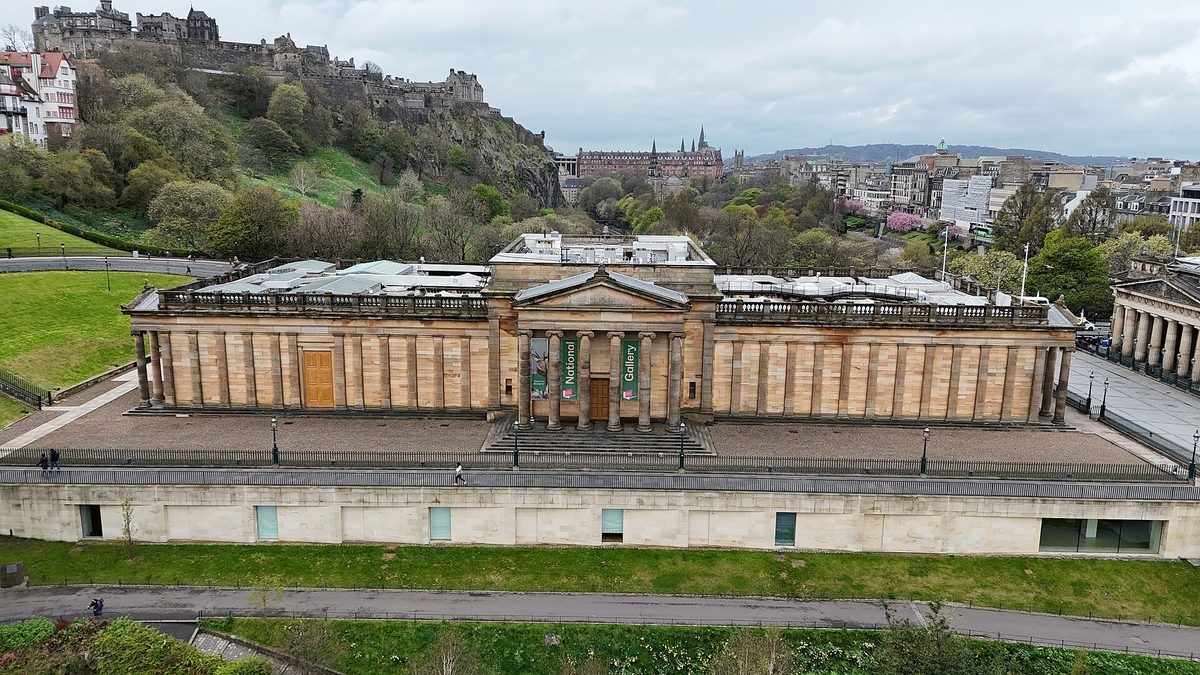
The Bridgewater Collection is, by common consent, the greatest private loan in the history of British art institutions. Assembled principally by Francis Egerton, the third Duke of Bridgewater, in the late eighteenth century, and augmented by his successors — the Marquesses of Stafford and later the Dukes of Sutherland — the collection represents a sustained engagement with the highest traditions of European painting across two centuries of aristocratic collecting. On long loan to the National Galleries of Scotland since 1946, it sits at the heart of the Scottish National Gallery's permanent collection, providing visitors with access to works that would command the highest prices at auction ever placed on a painting. The crown of the Bridgewater Collection, and one of the most beloved images in the history of Christian art, is Raphael's Bridgewater Madonna. Painted around 1507–1508 during the artist's Florentine period, this small panel depicts the Virgin cradling the Christ Child in an embrace of extraordinary tenderness and formal perfection. The composition distils Raphael's synthesis of Leonardo's sfumato and Michelangelo's sculptural energy into an image of divine motherhood so harmonious that it has stood for five centuries as the paradigm of Marian devotion in Western painting. That such a work should be in private hands — technically the property of the present Duke of Sutherland — rather than in a national collection is a fact that astonishes art historians and moves general visitors alike. Alongside the Raphael hang multiple paintings by Titian, whose sacred subjects — Venuses, Holy Families, scenes of the Passion — combine Venetian sensuousness with devotional depth in ways that no other artist achieved so consistently. Nicolas Poussin's Seven Sacraments, a series of seven paintings meditating on the central rites of the Catholic Church depicted with archaeological rigour and philosophical gravity, represents perhaps the most ambitious and intellectually demanding treatment of Christian liturgical themes in all of Baroque painting. Together these works make the Bridgewater loan one of the most extraordinary concentrations of Christian Old Masters accessible to the public anywhere in the world.
Raphael's Bridgewater Madonna, painted around 1507, is among the most perfect statements of Marian devotion in the history of Western art.
Poussin's Seven Sacraments — seven large canvases meditating on the rites of the Church with archaeological precision — is considered the greatest treatment of Christian liturgy in Baroque painting.
Multiple Titians and other Old Masters make this the finest private collection of Christian paintings still in personal ownership anywhere in the world.
The collection has been on long loan to the National Galleries of Scotland since 1946, providing free public access to works of extraordinary rarity.
Assembled by the Duke of Bridgewater in the late eighteenth century and augmented by the Dukes of Sutherland, the collection reflects two centuries of sustained aristocratic collecting.
Francis Egerton and the Formation of the Collection
Francis Egerton, the third and last Duke of Bridgewater, is best remembered as the patron of the Bridgewater Canal — the first true canal in England, cut from his coal mines at Worsley to Manchester, which inaugurated the industrial revolution in transport. But Egerton was also a collector of serious cultivation, and during his Grand Tour and subsequent purchasing in the 1790s he assembled an extraordinary group of Italian, French and Flemish paintings. The collection was dispersed between his family seat at Ashridge in Hertfordshire and a London townhouse at Cleveland House, where it attracted the admiration of artists and connoisseurs including Sir Joshua Reynolds. When Egerton died in 1803, the collection passed to his nephew, George Granville Leveson-Gower, later first Duke of Sutherland.
Raphael's Bridgewater Madonna
The Bridgewater Madonna is Raphael Sanzio's most intimate and formally perfect statement of Marian devotion. Painted in Florence around 1507, the small panel — roughly 81 by 56 centimetres — shows the Virgin Mary, dressed in red and blue, holding the Christ Child on her lap in a gentle but firm embrace. The Child reaches upward toward his mother's face with an expression of playful confidence, while the Virgin gazes downward with an expression compounded of tenderness, foreknowledge and resignation. The painting is remarkable for the quality of its drawing — the hands and drapery are of supreme refinement — and for the warmth of its colouring, which achieves through glazed oil the luminosity more commonly associated with fresco. Raphael painted it during the years when he was absorbing Leonardo's lessons in chiaroscuro and atmospheric unity, and the result is a synthesis that transcends both teachers.
Titian and the Venetian Presence
The Bridgewater Collection holds several works by Titian, whose career spanned nearly eight decades and whose religious output for the Habsburg court and for Italian churches represents the most sustained engagement with Christian subject matter by any Venetian painter. The Titians in the Sutherland loan include sacred subjects executed with the Venetian master's incomparable command of colour and his ability to imbue biblical narrative with sensory richness — warm flesh tones, luminous skies, cascading drapery — that made his altarpieces simultaneously devotional and aesthetically irresistible.
Poussin's Seven Sacraments
Nicolas Poussin painted two series of the Seven Sacraments during his career in Rome; the Bridgewater series, executed between 1644 and 1648, is the second and greater of the two. In these seven large canvases — depicting Baptism, the Eucharist, Confirmation, Penance, Holy Orders, Marriage and Extreme Unction — Poussin set the sacramental rites of the Catholic Church in early Christian settings of scrupulous archaeological accuracy. The figures dress in Roman garb and gather in spaces evocative of the catacombs and early house-churches, grounding the eternal rites in historical specificity. The compositional gravity of each painting, the quality of the silence that pervades them, and the intellectual rigour with which each sacramental moment is staged make this series the most profound meditation on Christian liturgy in the entire tradition of European painting. The collection came to Scotland through its purchase by the fourth Duke of Bridgewater and has remained in Scottish public view since 1946.
The Long Loan to Scotland
In 1945, the fifth Duke of Sutherland negotiated with the Trustees of the National Gallery of Scotland to place the Bridgewater Collection on long-term loan. The arrangement, renewed periodically since then, has given Scottish visitors and international tourists alike access to works that would otherwise remain in a private house. The loan represents a model of enlightened stewardship that has been cited frequently in debates about the future of great private collections — a way of maintaining family ownership while ensuring public access and professional conservation.
Visiting
The Bridgewater Collection hangs in the Scottish National Gallery on the Mound in central Edinburgh. Admission to the permanent collection is free. The gallery is open daily, with extended hours during the Edinburgh Festival in August. The Raphael Madonna and the Poussin Seven Sacraments are permanent fixtures of the collection and can be seen year-round. A dedicated catalogue of the Bridgewater Collection is available in the gallery shop.