Calouste Sarkis Gulbenkian was one of the most extraordinary figures of the twentieth century — a man whose personal wealth derived from a five-percent stake in the Iraq Petroleum Company (hence his nickname 'Mr Five Per Cent'), acquired through his role as the intermediary who brokered the concession agreement among the major oil companies in 1928, and who used that wealth to assemble, over five decades of systematic collecting, one of the finest and most personal private art collections in history. Born in Constantinople in 1869 into a wealthy Armenian family, educated in Marseille and London, Gulbenkian spent most of his adult life moving between London, Paris and Lisbon — where he settled during the Second World War and where he died in 1955 — while building a collection that reflected his deeply cultivated taste and his refusal to be governed by fashion or by the opinions of dealers and advisers. The Gulbenkian collection holds approximately 6,000 objects, but its quality — the ratio of exceptional to merely good works — is perhaps higher than that of any comparable institution. Gulbenkian bought slowly, chose with extreme discrimination, and was prepared to wait years for a specific work rather than accept a substitute. The Christian art holdings reflect these qualities throughout. The collection of medieval religious ivories — carved bone and elephant ivory diptychs, triptychs, statuettes of the Virgin and Child, reliquary plaques and devotional bookcovers produced in the Parisian workshops of the thirteenth and fourteenth centuries — is among the finest in private hands anywhere in the world. These small, luminously carved objects, which once served as the most portable and personal form of Christian devotion available to wealthy medieval laypeople, are displayed at the Gulbenkian with a care and lighting that allows their extraordinary detail to be appreciated as nowhere else. Illuminated manuscripts of the same period and quality complement the ivories: Books of Hours, gospel lectionaries and psalters decorated with gold and pigments of extraordinary preservation. Panel paintings from the early Renaissance tradition — Italian, Flemish and French works of the fourteenth and fifteenth centuries in which the hieratic formality of the Byzantine tradition gradually gives way to the naturalistic observation of the emerging Renaissance — provide the third major component of the Christian holdings. Rubens, Rembrandt and other Baroque masters appear in the later galleries, but it is the medieval and early Renaissance rooms that make the Gulbenkian a destination of particular importance for the student of Christian art.
'Mr Five Per Cent' — Calouste Gulbenkian's five-percent stake in the Iraq Petroleum Company financed one of the most personally discriminating private collections in history.
The medieval Gothic ivory collection — Parisian diptychs, triptychs and Virgin statuettes of the thirteenth and fourteenth centuries — is among the finest in private hands anywhere.
Illuminated manuscripts spanning the eleventh to the sixteenth century, including an Armenian Gospel Book of 1438, trace the full range of the western devotional book tradition.
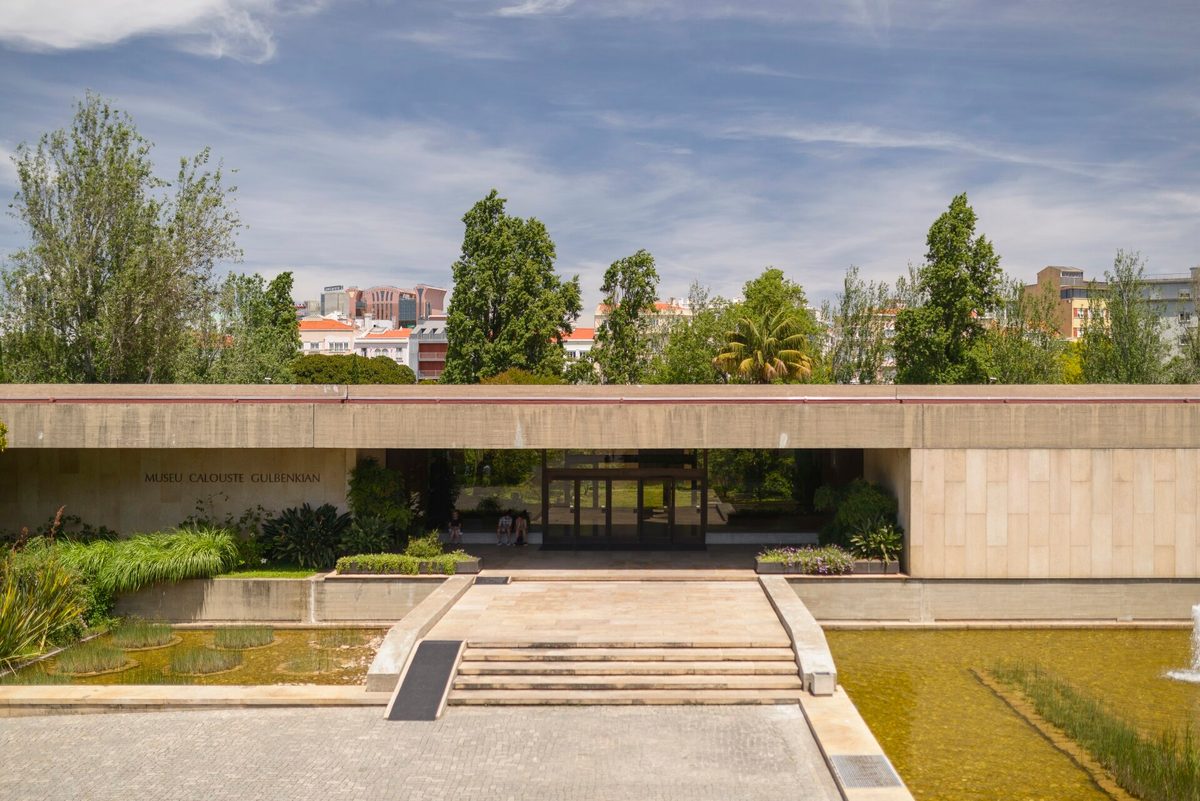
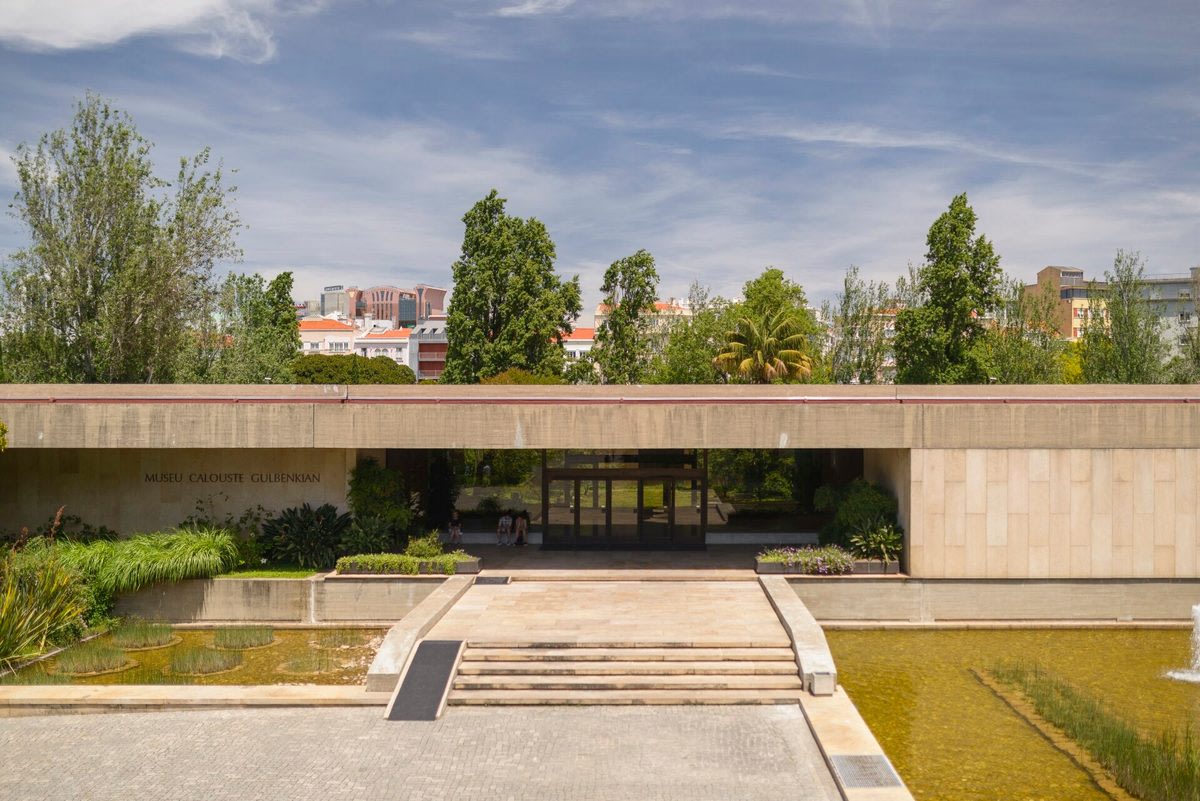
The museum building, set in a seven-hectare park in Lisbon, is a masterwork of mid-century Portuguese architecture — understated, tranquil and perfectly proportioned.
The Gulbenkian Foundation's philanthropic activities across the Portuguese-speaking world continue the collector's commitment to art, education and science.
Calouste Gulbenkian: Life and Character
Gulbenkian was educated at King's College London and worked initially as a financial journalist before entering the oil industry in the 1890s. His combination of technical knowledge of the petroleum industry, financial acumen, multilingual fluency — he spoke Turkish, Armenian, French, English, Arabic and Italian — and extraordinary personal discretion made him the ideal intermediary for the complex negotiations among European and American oil companies competing for access to Middle Eastern petroleum reserves. His five-percent stake in the Iraq Petroleum Company was maintained against repeated attempts by the major partners to dilute or eliminate it, and it continued to produce substantial income until his death, long after he had ceased to play any active role in the business. He never remarried after separating from his wife Nevarte, and he lived with great personal simplicity by the standards of his wealth, concentrating his energy and most of his income on the collection.
The Medieval Ivory Collection
The Gulbenkian's collection of Gothic ivories is among the finest assembled in the modern era. Parisian ivory carving of the thirteenth and fourteenth centuries — the tradition that produced the Virgin of the Sainte-Chapelle and the great ivory diptychs now in the Victoria and Albert Museum and the Louvre — represents the convergence of supreme technical mastery with the theological programme of High Gothic Catholicism. The small scale of these objects — most diptychs and triptychs are small enough to be held in both hands — belies the ambition of their programmes: scenes of the Passion, the Life of the Virgin, the Last Judgment and the lives of the saints are compressed into panels of a few square centimetres with a narrative clarity and emotional intensity that has rarely been matched in any medium. Gulbenkian sought out the finest available examples, sometimes purchasing entire collections en bloc from European aristocratic families.
Illuminated Manuscripts
The manuscripts in the Gulbenkian collection represent the full range of the western illuminated book from the eleventh to the sixteenth century. The most celebrated item is perhaps the Armenian Gospel Book of 1438, illuminated with gold and brilliant mineral pigments in the tradition of Armenian manuscript painting — a tradition closely related to but distinct from the Byzantine and Latin western traditions, and one with which Gulbenkian had a personal connection through his Armenian heritage. The Latin manuscripts include examples from the major French and Flemish ateliers of the Gothic period — Parisian workshops of the early fourteenth century, the Flemish Bruges and Ghent tradition of the late fifteenth — as well as Italian Renaissance manuscripts of secular and devotional character.
Rubens, Rembrandt and the Baroque
The later European paintings in the Gulbenkian collection include significant works by Peter Paul Rubens — whose Portrait of Hélène Fourment is one of the most intimate and psychologically direct paintings of the Baroque period — and by Rembrandt van Rijn, whose Portrait of an Old Man demonstrates the Dutch master's extraordinary ability to render the texture of aged skin and the interiority of a meditative mind. These works are not primarily religious in subject matter, but they belong to the tradition of northern European Protestant and Flemish Catholic painting that carried the Christian inheritance into the secular imagery of the seventeenth century, and they demonstrate the breadth of Gulbenkian's collecting across the full range of the European tradition.
René Lalique and the Applied Arts
One of the most famous components of the Gulbenkian collection is the comprehensive holding of jewellery and decorative objects by the French Art Nouveau goldsmith René Lalique, who became Gulbenkian's personal friend after meeting him at the Paris Universal Exhibition of 1900. The approximately 169 Lalique objects in the collection — brooches, combs, pendants, vases and decorative panels — represent the artist's full creative range and are displayed in a dedicated room that is among the most popular in the museum. While not Christian in subject matter, they demonstrate Gulbenkian's ability to recognise creative genius across every medium and period.
The Building and the Foundation
The Calouste Gulbenkian Foundation was established under Portuguese law in 1956, the year after Gulbenkian's death, and it administers both the museum and the Foundation's extensive philanthropic activities in arts, education and science across the Portuguese-speaking world. The museum building, designed by the Portuguese architects Alberto Pessoa, Pedro Cid and Ruy Athouguia and completed in 1969, is set in a park of approximately seven hectares in the Avenidas Novas neighbourhood of Lisbon. The building is notably understated from the exterior — low, spread horizontally across the landscape — and its interior is organised to create transitions between interior galleries and garden views that give the experience of the collection an unusual openness and tranquillity.
Visiting
The Calouste Gulbenkian Museum is open Wednesday through Monday, with Tuesday closures. Admission is charged, with free entry on Sundays from 2pm. The museum is located in central Lisbon, accessible from the Praça de Espanha metro station on the Blue line. The surrounding park is open to the public and provides a welcome respite from the urban environment. The museum's café and bookshop are of a high standard. A separate building on the site, the Centro de Arte Moderna, holds the Foundation's collection of twentieth-century Portuguese and international art.