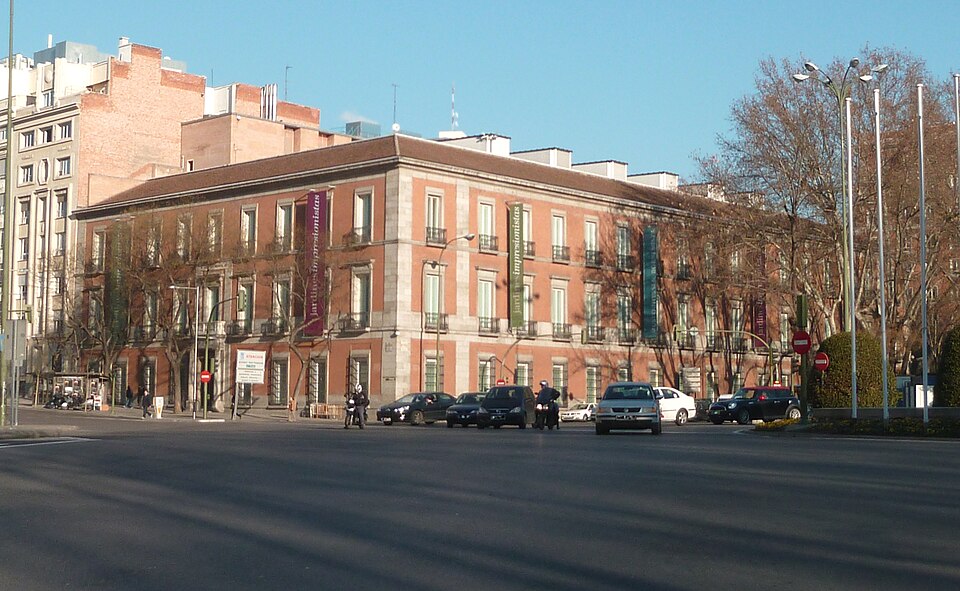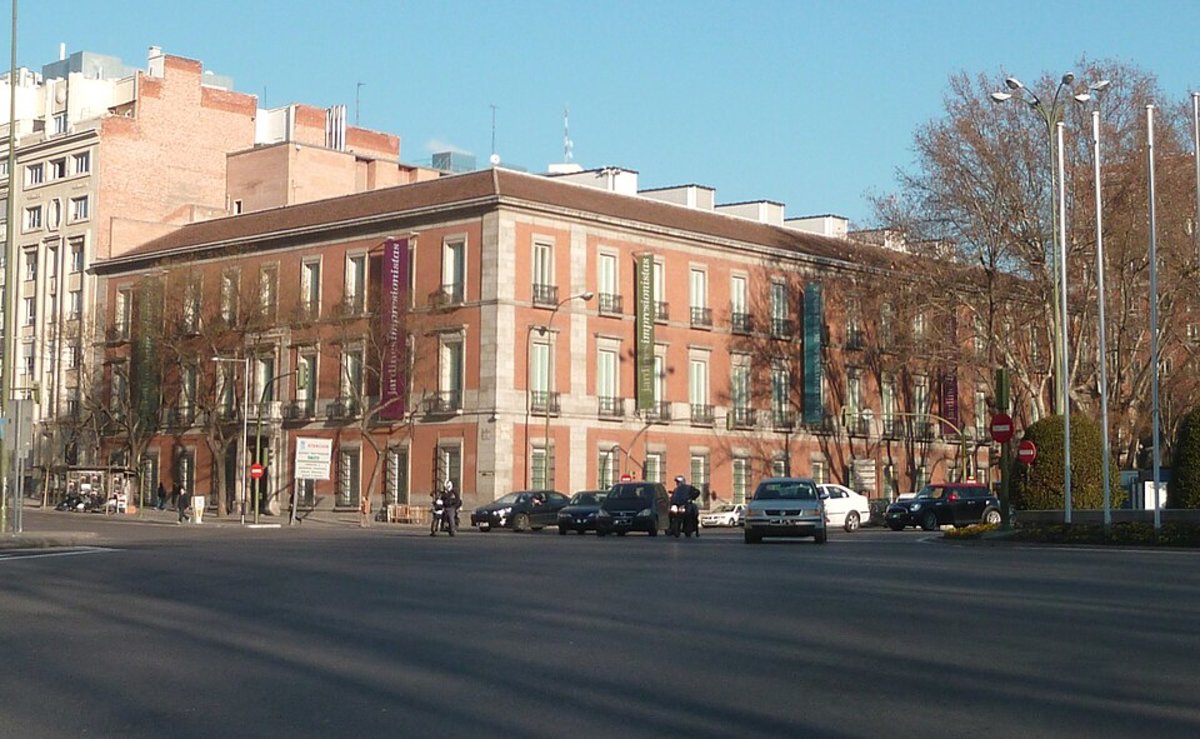
The Museo Thyssen-Bornemisza on the Paseo del Prado occupies a unique position in the history of collecting: it is the result of one family's extraordinary attempt to assemble a complete visual history of Western painting, from the medieval panel to the American abstraction, in the space of two generations. Baron Heinrich Thyssen-Bornemisza de Kászon began collecting seriously in the 1920s, and his son Hans Heinrich, who inherited the collection in 1947, expanded it into one of the largest and most comprehensive private holdings in the world — approximately 1,600 works covering every major school and period of European and American art. The Spanish government purchased 775 works from Hans Heinrich's estate in 1993 for 350 million dollars, a figure widely considered a bargain, and installed them in the Villahermosa Palace on the Prado, where they have attracted millions of visitors annually. For the student of Christian art, the Thyssen-Bornemisza is exceptional in its breadth and in the quality of specific works. Jan van Eyck's Annunciation diptych — a small, jewel-like double panel in which the Angel Gabriel and the Virgin Mary face each other across a hinged frame — brings to Madrid the most technically refined tradition of Flemish devotional painting: the microscopic detail of embroidered vestments, the golden letters of the Ave Maria suspended in the air between angel and woman, the flood of symbolic light that fills a chamber where every object carries devotional meaning. Caravaggio's St Catherine of Alexandria, painted around 1598, shows the third-century martyr as a young Roman woman of extraordinary physical presence, her hand resting on the spiked wheel of her torture with an expression of calm defiance that turns martyrdom into a statement of sovereign dignity. Albrecht Dürer, the German master who fused northern technical precision with Italian Renaissance idealism, contributes religious works that demonstrate how Christianity's visual language was transformed by the encounter between Gothic piety and humanist learning. Beyond these headline works, the museum traces the full tradition of Christian painting across seven centuries — Byzantine icons, Sienese gold-ground panels, Flemish altarpieces, German Protestant biblical imagery, Italian Baroque altarpieces, and nineteenth-century religious revival painting — in a sequence that is simultaneously art historical and devotional, a pilgrimage through the visual theology of the West.
Jan van Eyck's Annunciation diptych brings the supreme technical achievement of Flemish devotional painting to Madrid — a jewel of divine detail in each square centimetre.
Caravaggio's St Catherine of Alexandria reimagines martyrdom as sovereign dignity, the saint's calm gaze defying the emperor who could not break her faith.
Albrecht Dürer's religious works demonstrate the fusion of Northern Gothic intensity with Italian Renaissance clarity that defined the Reformation era.
Approximately 700 works spanning seven centuries make the Thyssen-Bornemisza the most encyclopaedic anthology of Western Christian painting in a single collection.
Located on Madrid's Paseo del Prado, the museum forms part of a trio with the Prado and Reina Sofía — one of the world's greatest concentrations of art within walking distance.
The Thyssen Family and the Formation of the Collection
Heinrich Thyssen-Bornemisza was a German-Hungarian industrialist who inherited vast steel and mining interests and used the proceeds to collect art with systematic intensity during the 1920s and 1930s. His taste was formed by the great European dealer-scholars of the period, particularly those associated with the Berlin and Vienna museums, and he concentrated initially on early German and Flemish painting — a field less fashionable and therefore more affordable than the Italian High Renaissance, but offering extraordinary quality at every level. By the time of his death in 1947, he had assembled several hundred works of the highest quality, housed principally at the Villa Favorita on the shore of Lake Lugano in Switzerland.
Hans Heinrich and the American Expansion
Hans Heinrich Thyssen-Bornemisza inherited both the collection and the industrial fortune, and he proved himself an even more voracious collector than his father. Over four decades from 1947, he expanded the holdings to cover not only Old Masters but also Impressionism, German Expressionism, Russian Constructivism and American painting — movements his father had ignored. The Christian art holdings grew correspondingly: medieval panels from Spain, Italy and Germany were added alongside Renaissance and Baroque works, creating a collection that was genuinely encyclopaedic in its coverage of Western religious painting from its Byzantine origins to its dissolution in the secularism of the modern era.
Jan van Eyck's Annunciation
The Annunciation diptych in the Thyssen-Bornemisza collection is one of Jan van Eyck's most perfectly preserved small works. Each panel is approximately 39 centimetres high, painted in oil on wood with a jeweller's attention to surface and light. The Gabriel panel shows the angel in elaborate embroidered robes, his wings still spread from flight, his right hand raised in greeting. The Mary panel shows the Virgin in a blue mantle, her head slightly bowed, one hand raised in acceptance. Between them, in the space that the closed diptych would create, the mystery of the Incarnation is made visible. Van Eyck's technique — building up translucent oil glazes over a white gesso ground to achieve colours of unprecedented luminosity — is nowhere more clearly displayed than in these small panels, where the light seems to emanate from within the surface rather than to fall upon it.
Caravaggio's St Catherine of Alexandria
Michelangelo Merisi da Caravaggio painted St Catherine of Alexandria around 1598, during the years when his revolutionary use of tenebrism — the dramatic contrast of light against profound darkness — was transforming the conventions of religious painting in Rome. Catherine was a fourth-century Christian martyr from Alexandria, renowned for her learning and her refusal to recant her faith before the Emperor Maxentius. Caravaggio depicts her as a young Roman woman of magnetic physical presence, kneeling beside the spiked wheel that was the instrument of her attempted torture. Her expression combines intelligence with a serenity that reads as the deepest form of courage. The painting exemplifies Caravaggio's theological insight: that sanctity is not a quality of otherworldly abstraction but of human beings fully present to their own reality.
Dürer and the German Tradition
Albrecht Dürer's religious works in the Thyssen-Bornemisza collection demonstrate the distinctive character of Northern European Christian art: a combination of Gothic intensity and Renaissance rationalism that produced images of extraordinary psychological depth. Dürer was the first northern artist to absorb the full lessons of the Italian Renaissance, visiting Venice twice and corresponding with the leading humanists of his age. His Christ among the Doctors, his Madonnas, and his portraits of saints carry this double inheritance — the precision and melancholy of the northern tradition married to the formal clarity of the south.
The Museum Today
The Museo Thyssen-Bornemisza is one of the three great museums of the Paseo del Prado, alongside the Prado itself and the Reina Sofía. Together they form one of the densest concentrations of great art in the world. The Thyssen's permanent collection of approximately 1,000 works is displayed chronologically across three floors of the Villahermosa Palace, beginning with medieval and early Renaissance panels on the top floor and descending through the centuries to twentieth-century American painting. Temporary exhibitions are mounted in the adjacent Jerónimos building. The museum's café and bookshop are of a high standard.
Visiting
The Museo Thyssen-Bornemisza is open Tuesday to Sunday, with Monday closures. It is located on the Paseo del Prado, a short walk from the Banco de España metro station and directly opposite the Naval Museum. Admission is charged for the permanent collection, with free entry on certain days for residents of the Madrid community. Audio guides and guided tours are available in multiple languages. The museum shop carries an excellent selection of catalogues and publications on the collection.