St Andrew’s Church, Mumbai

St Andrew’s Church, Mumbai

St Andrew's Church, Mumbai was originally built in 1575 and dates back to the Portuguese era

Type
Church
Country
India
Location
115, Hill Road, Old Rajaram Wadi
Scroll
01At a Glance

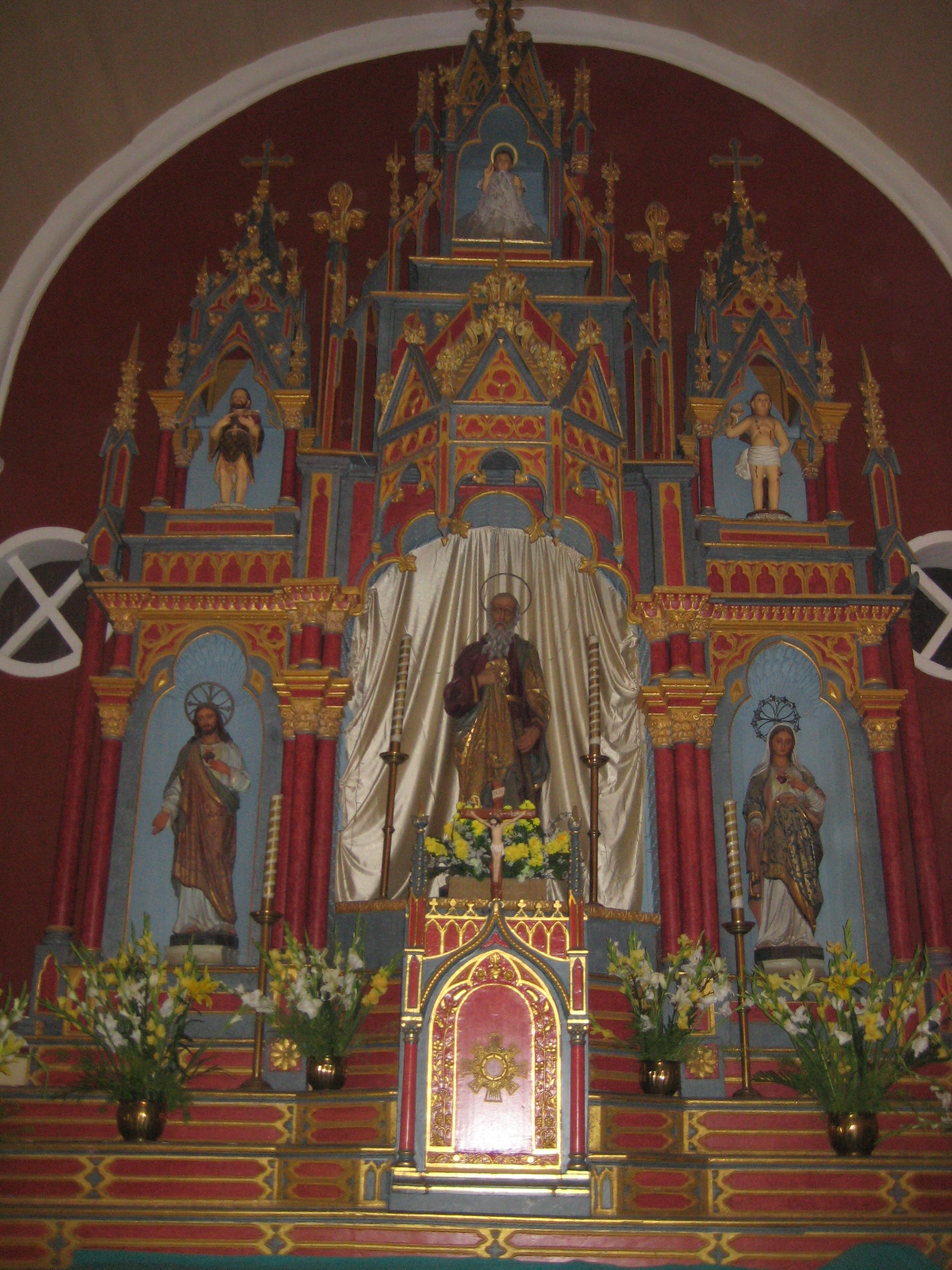
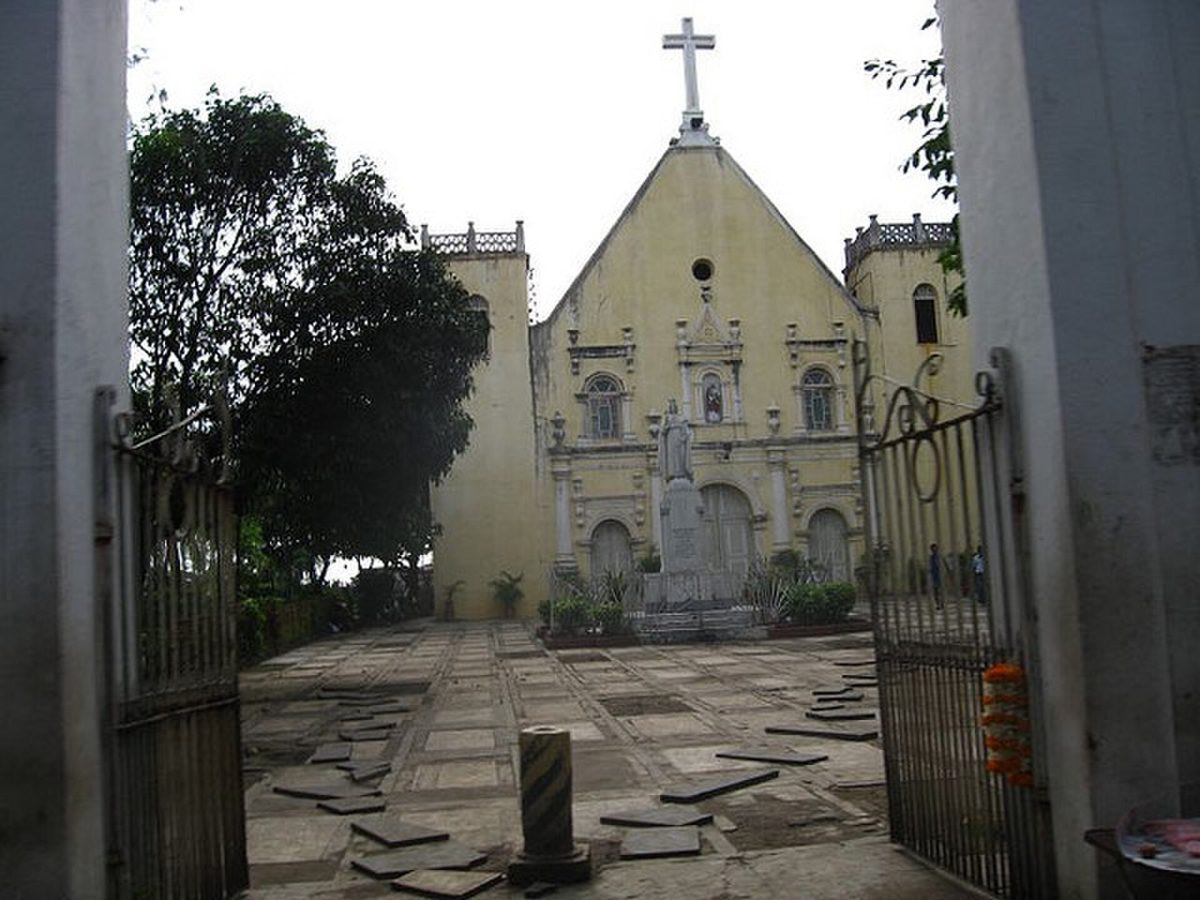
Home to eight churches, Bandra is quite often viewed as the centre of Christian life in the city of Mumbai. St Andrew’s Church, Mumbai is one of the oldest churches in the city and dates back to the Portuguese era. In 1534, the island of Salsette of which the present day cities of Mumbai and Thane form a part, came under Portuguese rule. Jesuits from Portugal were sent to the island in 1568 to begin the process of evangelisation. Although they did establish a few churches, they were not able to make much headway in converting the local population until the arrival of the charismatic Brother Manoel Gomes, the Apostle of Salsette. With his intricate knowledge of the local traditions and the language, Brother Manoel was able to win over a lot of hearts. By 1580, two thousand had accepted Christianity as a result of his efforts and this number kept increasing each year. It is said that by the year 1603, all of Bandra had been baptised, the credit for which going to the Apostle of Salsette, Brother Manoel. In 1575, the Portuguese had built the Hermitage of St Andrew which initially formed part of the parish of Santa Ana. As the numbers of Christians in the parish were increasing, Santa Ana was bifurcated and the new parish of St Andrew was carved out from it. St Andrew’s Church, Mumbai was rebuilt and consecrated in 1616, the same year in which the new parish came into existence. It stands on the sea-shore of Bandra, and has weathered many a storm in its long and illustrious history. In 1618, just two years after it had been rebuilt a cyclone of unprecedented intensity blew away the entire roof. This was not all, for by the year 1739 political turmoil was brewing and the Marathas invaded the island of Salsette. The church of Santa Ana was blown up by the British on the advice of the Portuguese to prevent the church falling into Maratha hands. St Andrew’s was the only church left standing in Bandra, and had to care for the parishioners of its parent church. The original baptismal registry from Santa Ana is still preserved at St Andrew’s church, as is a magnificent cross carved from a single stone. This cross dating to 1678 has forty five intricately carved icons that are of biblical significance. In 1700, Arab pirates from Muscat attacked the Basilica of Our Lady of the Mount , better known as Mount Mary . They destroyed the statue of Our Lady of the Mount by chopping off its glittering right forearm. As the church was now without its main figure, the statue of Our Lady of Navigators from the side altar of St Andrew’s Church, was loaned to it. It was returned after some years, when the original statue was repaired and reinstalled. The church that stands today remains more or less the same one that was first built in 1616. There have been a few changes but they have largely maintained the essential character of the church. When the church’s wooden portico made way for the present facade in 1966, the height of a round window was adjusted. This was to ensure that the morning sunbeams continued to shine on the centre of the altar where the host is stored- as it did in the original.

1

St Andrew’s Church, Mumbai is one of the oldest churches in the city and dates back to the Portuguese era

2

Although they did establish a few churches, they were not able to make much headway in converting the local population until the arrival of the charismatic Brother Manoel Gomes, the Apostle of Salsette

3

By 1580, two thousand had accepted Christianity as a result of his efforts and this number kept increasing each year

4

It is said that by the year 1603, all of Bandra had been baptised, the credit for which going to the Apostle of Salsette, Brother Manoel

5

In 1575, the Portuguese had built the Hermitage of St Andrew which initially formed part of the parish of Santa Ana

02Plan Your Visit
Getting There
St Andrews Church, Byculla, Mumbai, Maharashtra 400027

In Byculla, south-central Mumbai. From Byculla railway station: 5-minute walk. From CST: 15 minutes by auto. From Dadar: 15 minutes by auto.

Open in Google Maps →
IST (UTC+5:30)
--:--:--

Sunday morning services are the best time to experience the church in its worshipping context. The building may be locked on weekdays — check with the CNI office.

Opening Hours
Church8:00 AM - 6:00 PM daily; Sunday services 9:00 AM and 11:00 AM (approximate)
03Must See

What to seek out, and why it matters

I
From the compound

The Colonial Neoclassical Exterior

The neoclassical portico and tower of St Andrew's Church — whitewashed, with columns and classical proportions — is characteristic of the colonial church architecture that the Scottish Presbyterians and the British East India Company brought to Bombay in the early 19th century. Set in the Byculla area, now one of Mumbai's most densely populated inner suburbs, the church compound provides a quiet enclosure.

II
Inside the church

The Interior

The interior of St Andrew's — with its clear glass windows, plain white walls, and the absence of images that characterises the Reformed Presbyterian tradition — is a studied contrast to the visual richness of nearby Catholic churches. The aesthetic of Protestant worship — the Word, the pulpit, the directness of the congregation facing the preacher — is expressed in the architecture.

III
Inside the church

The Memorial Tablets

Like most colonial-era churches in Mumbai, St Andrew's carries memorial tablets to Scottish merchants, soldiers, and administrators who died in Bombay in the 19th century. Reading the tablets — the names, ages, and professions of the dead — is a social history of the Scottish presence in British Bombay.

IV
Surrounding area

The Byculla Heritage Context

Byculla was one of colonial Bombay's most important residential areas — home to merchants, professionals, and the missionary community. The area around St Andrew's includes other significant heritage buildings and provides a context for understanding the layered social geography of 19th-century Bombay.

V
Church history

The CNI Ecumenical Union Legacy

St Andrew's membership in the Church of North India represents one of the most significant ecumenical achievements of the 20th century — the 1970 union of Anglicans, Presbyterians, Methodists, Congregationalists, Baptists, and others into a single Church of North India. That union is part of the continuing history of this building.

04Masses & Events
Sunday Service9:00 AM and 11:00 AM

CNI Sunday worship

Feast of St AndrewNovember 30

The patronal feast

Special OccasionsChristmas, Easter, other feasts

Major Christian celebrations

5Reflection & Prayer

St Andrew of Bethsaida was the first disciple called. He did two things the Gospel records: he answered his own call, and then he immediately went to find his brother Simon and brought him to Jesus. That is Andrew's apostolic method: bring your brother. The Scottish merchants who built the Scotch Kirk in Bombay in 1819 had answered their call in a different sense — they were there for trade. But they built a church. They brought the community with them. That too is a form of Andrew's apostolate.

John 1:41-42

The first thing Andrew did was to find his brother Simon and tell him, We have found the Messiah (that is, the Christ). And he brought him to Jesus.

Read in full on Bible Gateway →
A Pilgrim's Prayer

St Andrew, first-called, brother-bringer — teach me your method. You did not keep the Messiah to yourself. The first thing you did was find your brother. Let me also immediately go to find the person closest to me and bring them to Jesus. Not by argument or persuasion or pressure — but by invitation: come and see. Amen.

06More

Home to eight churches, Bandra is quite often viewed as the centre of Christian life in the city of Mumbai. St Andrew’s Church, Mumbai, is one of the oldest churches in the city and dates back to the Portuguese era.

The Apostle of Salsette

In 1534, the island of Salsette, of which the present-day cities of Mumbai and Thane form a part, came under Portuguese rule. Jesuits from Portugal were sent to the island in 1568 to begin the process of evangelisation. Although they did establish a few churches, they were not able to make much headway in converting the local population until the arrival of the charismatic Brother Manoel Gomes, the Apostle of Salsette.

With his intricate knowledge of the local traditions and the language, Brother Manoel was able to win over a lot of hearts. By 1580, two thousand had accepted Christianity as a result of his efforts, and this number kept increasing each year. It is said that by the year 1603, all of Bandra had been baptised, the credit for which goes to the Apostle of Salsette, Brother Manoel.

A New Parish

In 1575, the Portuguese had built the Hermitage of St Andrew, which initially formed part of the parish of Santa Ana. As the numbers of Christians in the parish were increasing, Santa Ana was bifurcated and the new parish of St Andrew was carved out from it. St Andrew’s Church was rebuilt and consecrated in 1616, the same year in which the new parish came into existence. It stands on the seashore of Bandra and has weathered many a storm in its long and illustrious history.

Storms and Invasions

In 1618, just two years after it had been rebuilt, a cyclone of unprecedented intensity blew away the entire roof. This was not all, for by the year 1739 political turmoil was brewing and the Marathas invaded the island of Salsette. The church of Santa Ana was blown up by the British, on the advice of the Portuguese, to prevent it falling into Maratha hands. St Andrew’s was the only church left standing in Bandra, and had to care for the parishioners of its parent church. The original baptismal registry from Santa Ana is still preserved at St Andrew’s church, as is a magnificent cross carved from a single stone. This cross, dating to 1678, has forty-five intricately carved icons of biblical significance.

The Loaned Statue

In 1700, Arab pirates from Muscat attacked the Basilica of Our Lady of the Mount, better known as Mount Mary. They destroyed the statue of Our Lady of the Mount by chopping off its glittering right forearm. As the church was now without its main figure, the statue of Our Lady of Navigators from the side altar of St Andrew’s Church was loaned to it. It was returned after some years, when the original statue was repaired and reinstalled.

The Church Today

The church that stands today remains more or less the same one that was first built in 1616. There have been a few changes, but they have largely maintained the essential character of the church. When the church’s wooden portico made way for the present facade in 1966, the height of a round window was adjusted. This was to ensure that the morning sunbeams continued to shine on the centre of the altar, where the host is stored — as they did in the original.

Saints Associated With This Site
More from India
Church of St John the Evangelist (Afghan Church), Mumbai
Shahid Bhagat Singh Road, Navy Nagar, Colaba
All Saints Cathedral, Allahabad
Sarojini Naidu Marg, Civil Lines, Prayagraj (Allahabad)
Archdioceasan Heritage Museum, Mumbai
Archdiocesan Heritage Museum, St Pius X College, Aarey Road
Basilica of Bom Jesus, Goa
Basilica of Bom Jesus, Old Goa Road, Bainguinim