St Patrick’s Church, Bangalore

St Patrick’s Church, Bangalore

Former stable, Diocesan Cathedral, Canonical parish- St Patrick's Church, Bangalore has had many avatars. Read its riveting history.

Type
Church
Country
India
Location
15K, Brigade Rd, Shanthala Nagar
Scroll
01At a Glance

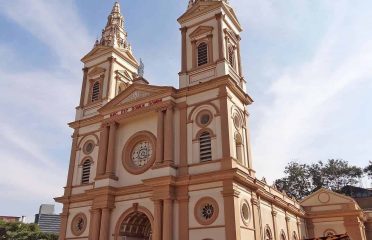
St Patrick’s Church, Bangalore: An oasis of calm in Bangalore’s busiest quarter Tucked away from Bangalore’s busy Brigade Road, St Patrick’s Church stands out for its majestic calm amidst the din of its environs. For an ageing property that has undergone several rounds of renovation, St Patrick’s has a surprisingly vibrant air to it. Its leafy glades rustle in the quiet afternoon sun, welcoming visitors and parishioners alike, who seek a momentary break from the bustle of one of India’s largest metros. The thing that first strikes you about this lovely colonial-era church is its twin spires, mounted on either side of an imposing facade. A short driveway leads to a smartly paved courtyard, surrounded by greenery that envelopes you with its typical fragrance. Brightly lit interiors, topped by a beautiful circular roof lend the structure an element of sanctity in keeping with its consecrated status. The story of St Patrick’s begins about a hundred and eighty years ago when Commissioner Mark Cubbon, with the concurrence of the Maharaja of Mysore, granted a piece of land for erecting a church. What was once a stable for horses and camels of the British military, was converted to a place of worship. The first stone was laid in July 1841 and over it was erected a monument to the abiding faith of its builder, Fr Jacques – Henry Gailhot. As Army Chaplain to the British troops stationed there, Fr Gailhot was instrumental in establishing the church to cater to their spiritual needs. He served as the first Parish Priest. By the end of 1844, the beginnings of the present church were in place. Consecrated as the Church of the Assumption, it was popularly referred to as St Patrick’s by the Irish troops who garrisoned the nearby cantonment. Funds for its construction came from some but not all the Irish soldiers. Many feared reprisals from their Anglican officers. At its infancy, the church had not yet acquired its trademark steeples and was a relatively modest affair. The steeples came half a century later in 1894 when extensive reconstruction began. In terms of jurisdiction, the church formed part of the Mysore diocese and served as its Cathedral from 1886 to 1940. The Diocese of Bangalore was erected only a century later in 1940 and promoted to become a Metropolitan See or Archdiocese in 1953. With the establishment of the new Diocese, St Patrick’s lost its Cathedral status. The church of St Francis now became the new Cathedral. It continued as a personal parish (as established under Canonical law) for Europeans and other Indian Catholic communities like Goans and Mangaloreans. By the early sixties, it reverted to its former status of a territorial parish. Today it is one of the most well-known parishes in the city . No mention of St Patrick’s would be complete without referring to the shrine of St Anthony. Built adjacent to the main church, the shrine began life as a recreation hall but converted to its present use in the 1950s. It has since been renovated and attracts large numbers of the devout. The annual feast of St Anthony on June 13 has gained popularity across people of diverse faiths and celebrated with greater devotion. The feast of St Patrick is on March 17 and celebrated across the world. It is a public holiday in Ireland and serves as a de facto National Day for the Irish. Incidentally, St Patrick’s Day is a holiday in more countries than any other National Day. For St Patrick’s Church, Bangalore it is not just the feast of its patron saint. March 17 rekindles memories of its founding days and a legacy rooted in its colonial past.

1

Its leafy glades rustle in the quiet afternoon sun, welcoming visitors and parishioners alike, who seek a momentary break from the bustle of one of India’s largest metros

2

The thing that first strikes you about this lovely colonial-era church is its twin spires, mounted on either side of an imposing facade

3

Brightly lit interiors, topped by a beautiful circular roof lend the structure an element of sanctity in keeping with its consecrated status

4

The first stone was laid in July 1841 and over it was erected a monument to the abiding faith of its builder, Fr Jacques – Henry Gailhot

5

He served as the first Parish Priest

02Plan Your Visit
Getting There
St Patrick's Church, 1 Museum Road, Richmond Town, Bangalore, Karnataka 560025

In Richmond Town, central Bangalore, near Museum Road. Metro: Trinity Station (Purple Line), 10-minute walk. By auto from MG Road: 10 minutes. From Cubbon Park: 15 minutes.

Open in Google Maps →
IST (UTC+5:30)
--:--:--

The Richmond Town area has several heritage buildings and is pleasant to walk. The church compound is a quiet enclosure. The Sunday 9:30 AM Mass draws the main congregation.

Opening Hours
Church7:00 AM - 7:00 PM daily; Sunday Mass 7:30 AM and 9:30 AM
03Must See

What to seek out, and why it matters

I
From Museum Road

The Gothic Exterior and Tower

The Gothic brick church and tower of St Patrick's — visible above the Museum Road trees — is one of the most recognisable images of the Richmond Town Christian quarter. The pointed arches, the brick construction, and the scale of the building reflect the ambition of the Irish Jesuit mission in Bangalore.

II
Inside the church

The Interior and Memorial Tablets

The interior of St Patrick's contains the memorial tablets and monuments to the Irish and Anglo-Indian Catholics of colonial Bangalore — soldiers, administrators, schoolmasters, and their families. Reading the tablets is a social history of the Irish Catholic presence in British India.

III
March 17

The St Patrick's Day Celebration

The feast of St Patrick on March 17 is celebrated at the church with particular joy — it is one of the occasions when the Irish heritage of the church's foundation is brought to the surface. The celebration connects the Bangalore parish to the world-wide Irish diaspora that St Patrick's church represents.

IV
Surrounding neighbourhood

The Richmond Town Heritage Context

Richmond Town — with its bungalows, its tree-lined streets, its colonial-era churches and schools — is one of the few areas of Bangalore where the texture of colonial civic life is still legible. Walking from St Patrick's through Richmond Town to the National Museum and Cubbon Park connects the Catholic, Anglican, and civic institutions of colonial Bangalore.

V
In context of the city

The Irish Jesuit Educational Legacy

The Irish Jesuits' primary contribution to Bangalore was educational: St Joseph's College (1882), Bishop Cotton School, and other institutions that formed generations of Bangalore's professional class. St Patrick's was the spiritual home of this educational enterprise. The schools are the most lasting mark of the Irish mission in Bangalore.

04Masses & Events
Sunday Mass7:30 AM and 9:30 AM

Primary Sunday celebrations

Daily Mass7:30 AM on weekdays

Morning Mass

Feast of St PatrickMarch 17

The patronal feast of the church and of Ireland

5Reflection & Prayer

Patrick of Britain was kidnapped and taken to Ireland as a slave. He escaped, became a priest, and then went back to Ireland as a missionary — back to the country that had enslaved him, to serve the people who had taken him. He used the shamrock to explain the Trinity. He built on what was already there. The Irish Jesuits who came to Bangalore were following a long tradition of Irish missionaries carrying faith to distant places — not as conquerors but as servants of the people they came to. The schools they founded are still producing the people who run Bangalore.

Matthew 28:19

Therefore go and make disciples of all nations, baptizing them in the name of the Father and of the Son and of the Holy Spirit.

Read in full on Bible Gateway →
A Pilgrim's Prayer

Go — and the Irish went. They went to India, to the United States, to Australia, to wherever the mission was. They built schools because they believed that knowledge and faith are not enemies. They built churches because they believed the community needs a place to gather. They built hospitals because they believed the body matters as much as the soul. Go — and they went. Let me go wherever I am sent, with the same combination of faith, education, and care for the whole person. Amen.

06More

Tucked away from Bangalore’s busy Brigade Road, St Patrick’s Church stands out for its majestic calm amidst the din of its environs. For an ageing property that has undergone several rounds of renovation, St Patrick’s has a surprisingly vibrant air to it. Its leafy glades rustle in the quiet afternoon sun, welcoming visitors and parishioners alike, who seek a momentary break from the bustle of one of India’s largest metros.

First Impressions

The thing that first strikes you about this lovely colonial-era church is its twin spires, mounted on either side of an imposing facade. A short driveway leads to a smartly paved courtyard, surrounded by greenery that envelops you with its typical fragrance. Brightly lit interiors, topped by a beautiful circular roof, lend the structure an element of sanctity in keeping with its consecrated status.

History

The story of St Patrick’s begins about a hundred and eighty years ago, when Commissioner Mark Cubbon, with the concurrence of the Maharaja of Mysore, granted a piece of land for erecting a church. What was once a stable for the horses and camels of the British military was converted to a place of worship. The first stone was laid in July 1841, and over it was erected a monument to the abiding faith of its builder, Fr Jacques-Henry Gailhot. As Army Chaplain to the British troops stationed there, Fr Gailhot was instrumental in establishing the church to cater to their spiritual needs. He served as the first Parish Priest.

By the end of 1844, the beginnings of the present church were in place. Consecrated as the Church of the Assumption, it was popularly referred to as St Patrick’s by the Irish troops who garrisoned the nearby cantonment. Funds for its construction came from some, but not all, of the Irish soldiers. Many feared reprisals from their Anglican officers. In its infancy, the church had not yet acquired its trademark steeples and was a relatively modest affair. The steeples came half a century later, in 1894, when extensive reconstruction began.

Changing Status

In terms of jurisdiction, the church formed part of the Mysore diocese and served as its cathedral from 1886 to 1940. The Diocese of Bangalore was erected only a century later, in 1940, and promoted to become a Metropolitan See, or Archdiocese, in 1953. With the establishment of the new diocese, St Patrick’s lost its cathedral status. The church of St Francis now became the new cathedral.

St Patrick’s continued as a personal parish (as established under Canon law) for Europeans and other Indian Catholic communities such as Goans and Mangaloreans. By the early sixties, it reverted to its former status of a territorial parish. Today it is one of the most well-known parishes in the city.

The Shrine of St Anthony

No mention of St Patrick’s would be complete without referring to the shrine of St Anthony. Built adjacent to the main church, the shrine began life as a recreation hall but was converted to its present use in the 1950s. It has since been renovated and attracts large numbers of the devout. The annual feast of St Anthony on June 13 has gained popularity across people of diverse faiths and is celebrated with great devotion.

The Feast of St Patrick

The feast of St Patrick is on March 17 and is celebrated across the world. It is a public holiday in Ireland and serves as a de facto national day for the Irish. Incidentally, St Patrick’s Day is a holiday in more countries than any other national day. For St Patrick’s Church, Bangalore, it is not just the feast of its patron saint. March 17 rekindles memories of its founding days and a legacy rooted in its colonial past.
Saints Associated With This Site
More from India
Church of St John the Evangelist (Afghan Church), Mumbai
Shahid Bhagat Singh Road, Navy Nagar, Colaba
All Saints Cathedral, Allahabad
Sarojini Naidu Marg, Civil Lines, Prayagraj (Allahabad)
Archdioceasan Heritage Museum, Mumbai
Archdiocesan Heritage Museum, St Pius X College, Aarey Road
Basilica of Bom Jesus, Goa
Basilica of Bom Jesus, Old Goa Road, Bainguinim