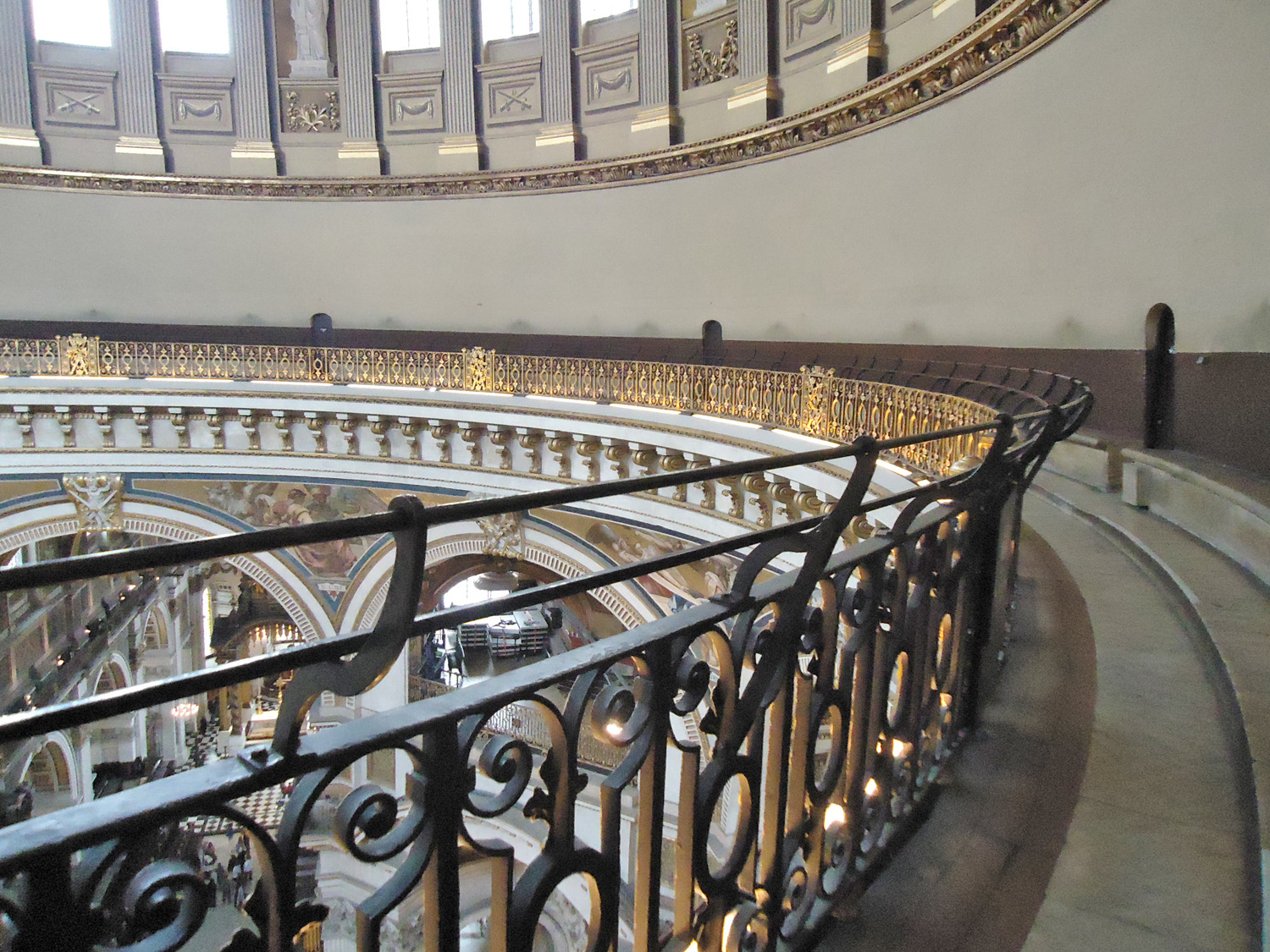
The Dome
85 metres up.
 Pilgrimstays
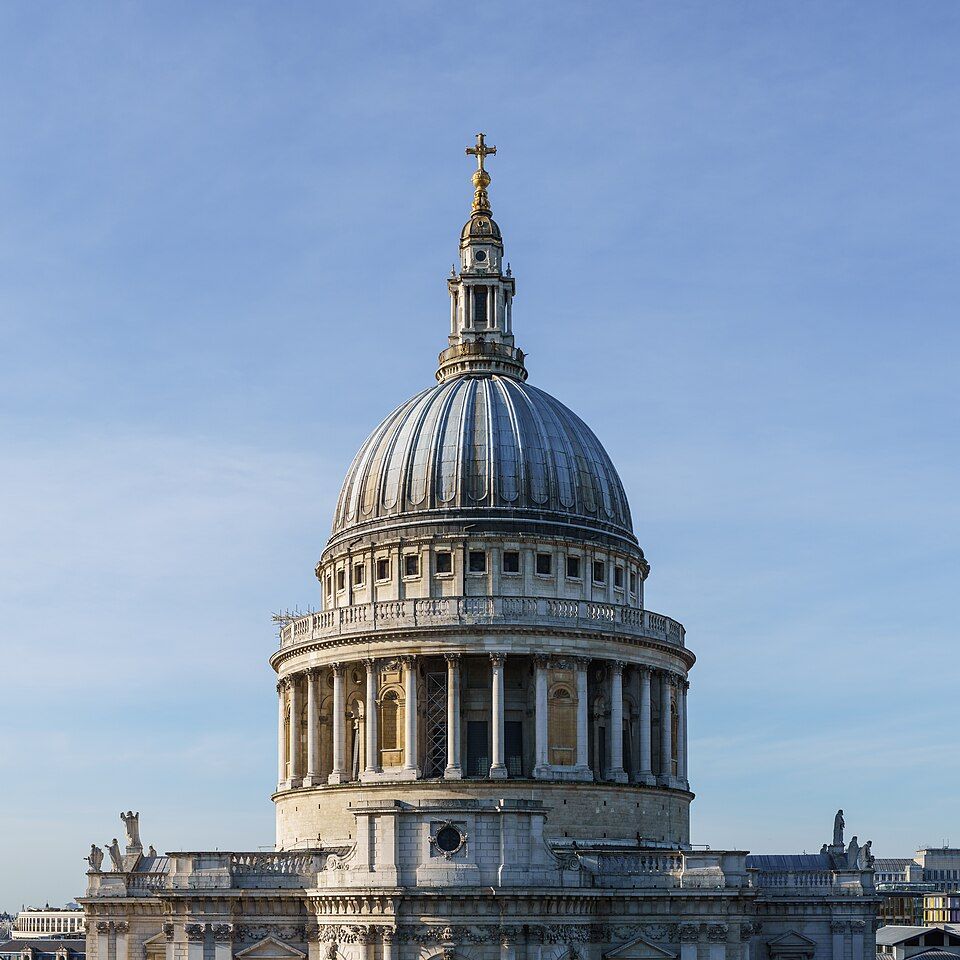
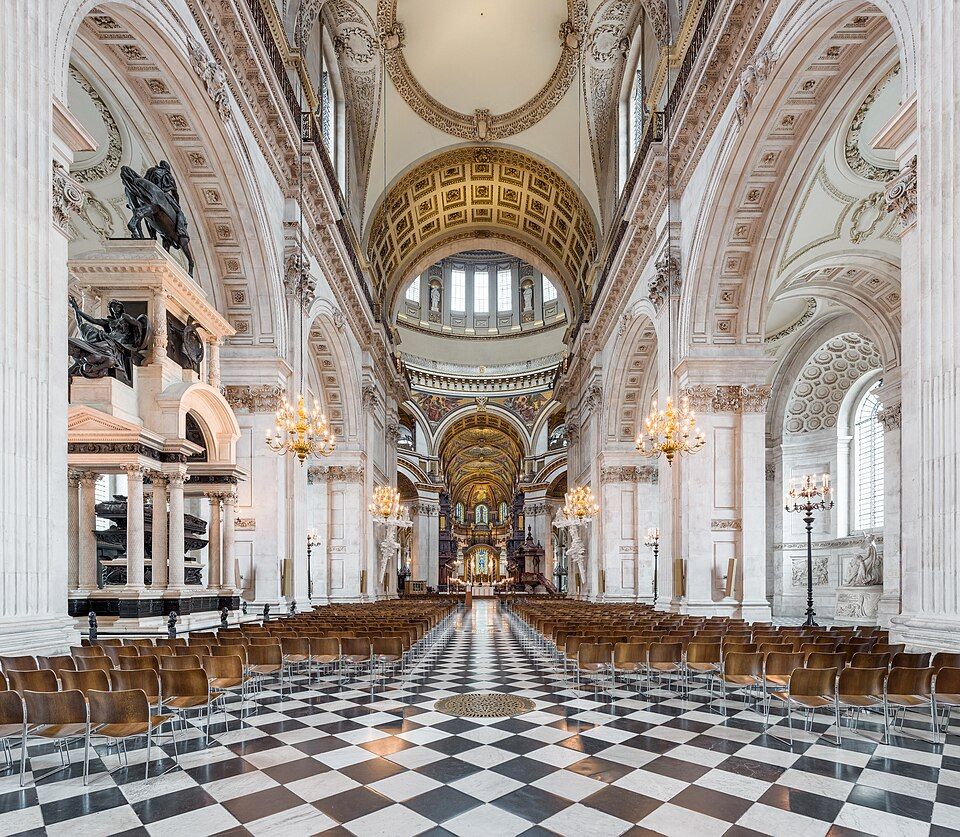
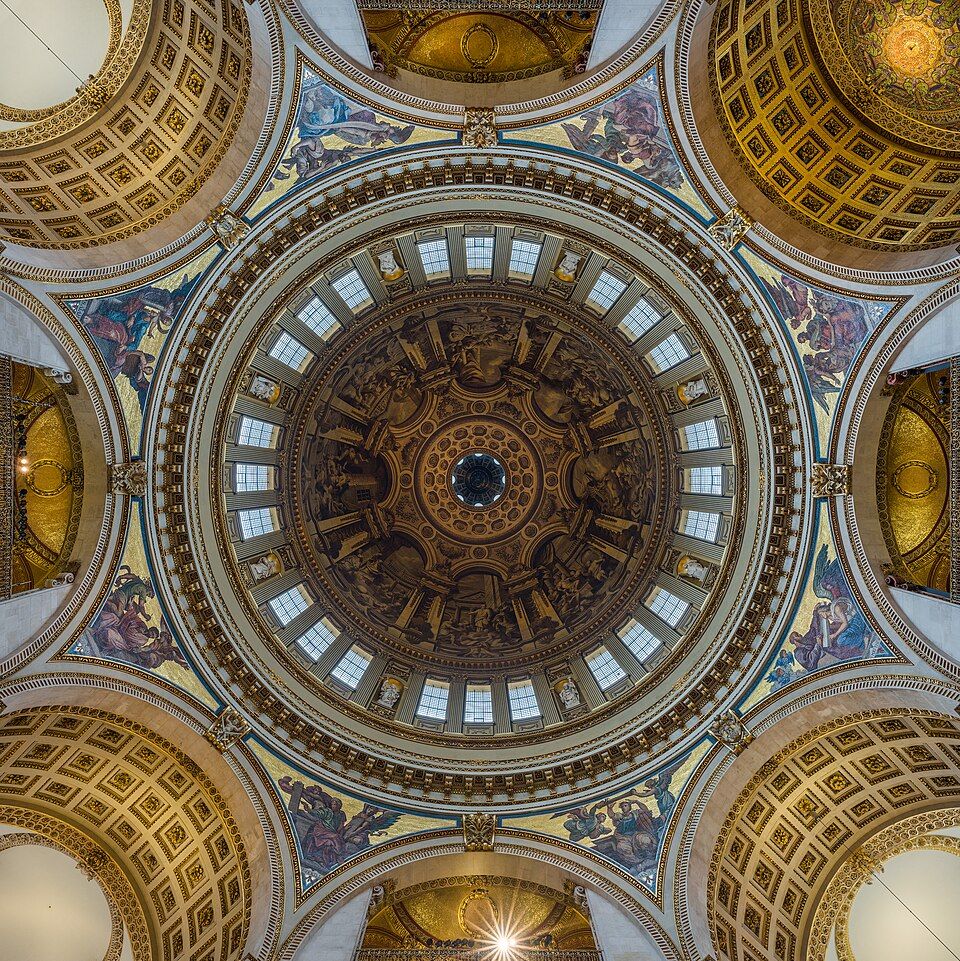
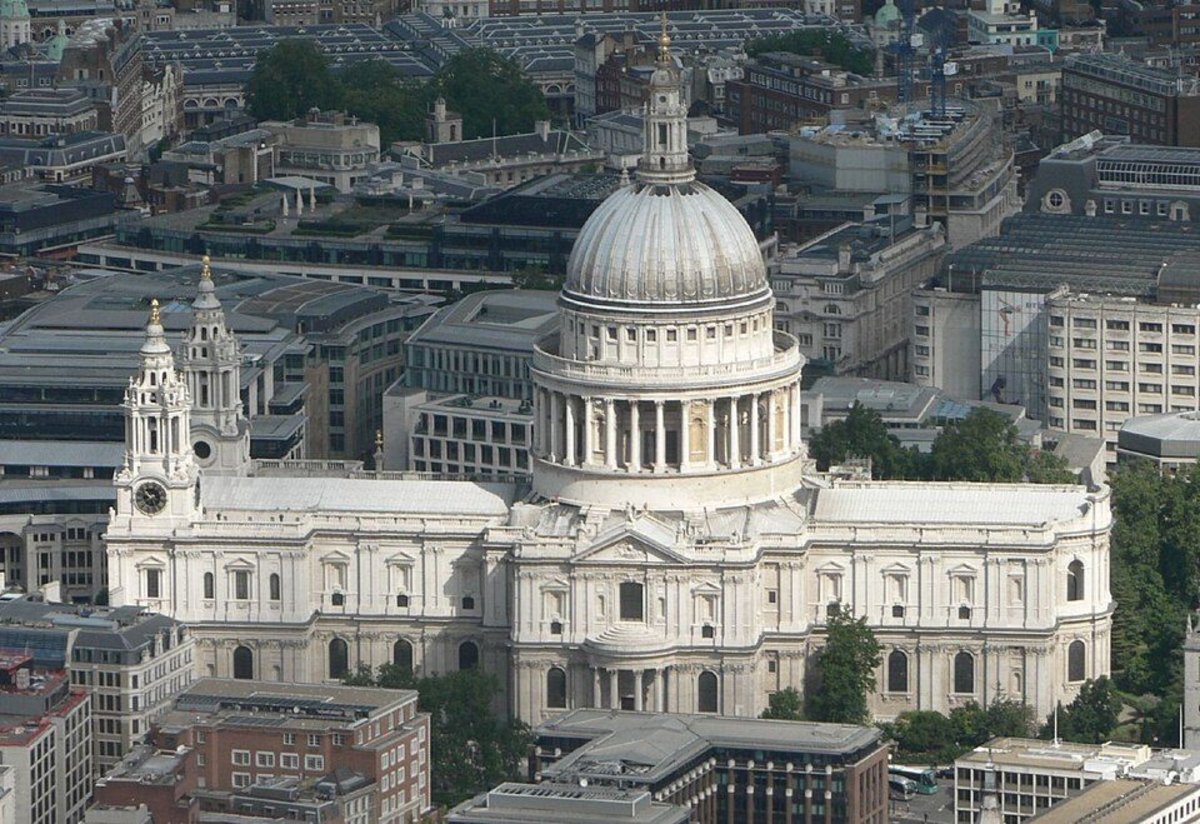
St Paul's Cathedral, Christopher Wren's masterpiece on Ludgate Hill, has dominated the London skyline since its consecration in 1697. It replaced the medieval St Paul's destroyed in the Great Fire of London of 1666, and remains one of the largest cathedral domes in the world at 111 metres — surpassed only by St Peter's in Rome and the Panthéon in Paris. Approximately 1.7 million people visit each year. Wren designed everything about the building — from the dome structure (an outer dome, inner dome, and hidden brick cone between them, an unprecedented engineering innovation) to the furnishings. The Whispering Gallery inside the dome — where a whisper against the curved wall can be heard 34 metres away on the opposite side — is one of the engineering curiosities that every visitor tests. The crypt contains the tombs of Wellington, Nelson, and Wren himself, whose epitaph reads simply: Si monumentum requiris, circumspice — If you seek a monument, look around you. During the Blitz of 1940-41, St Paul's became the symbol of London's resistance. The famous photograph of the dome rising above the smoke of burning buildings around it — taken on December 29, 1940 — is one of the most resonant images of the Second World War. Churchill ordered that the cathedral be protected at all costs. Volunteer fire-watchers lived on the roof during the Blitz to extinguish incendiary bombs before they could take hold. The dome survived.
Christopher Wren's masterpiece — one of the finest Baroque buildings in the world
The dome at 111 metres is the third largest cathedral dome in the world The Whispering Gallery allows a whisper to be heard 34 metres away across the dome
The famous Blitz photograph of the dome above the London fires became an icon of British resilience Wren's epitaph in the crypt: Si monumentum requiris, circumspice — If you seek a monument, look around you
85 metres up.
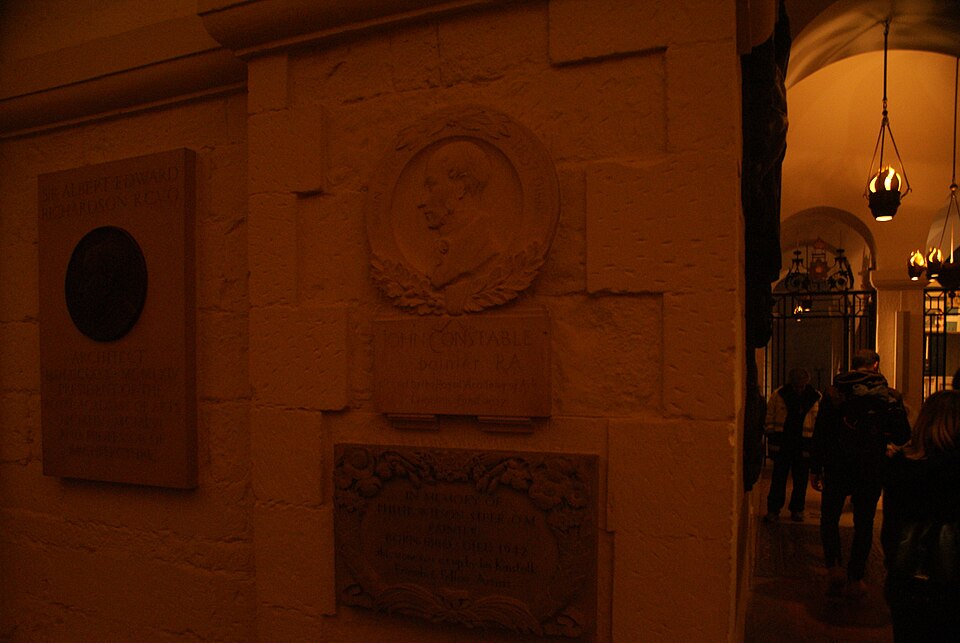
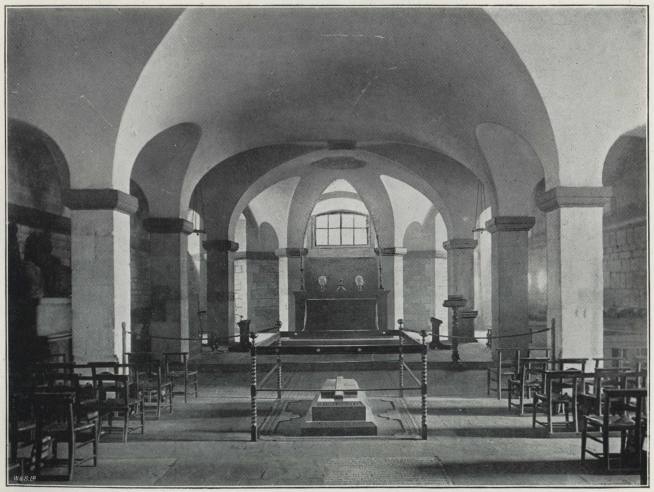
Below the nave The crypt of St Paul's is the largest in Europe. Nelson's sarcophagus (originally made for Cardinal Wolsey), Wellington's enormous tomb of Irish granite, and Wren's simple flat stone are its three principal monuments. The crypt also contains memorials to artists, musicians, and scientists including J.M.W. Turner, Henry Moore, and Alexander Fleming.
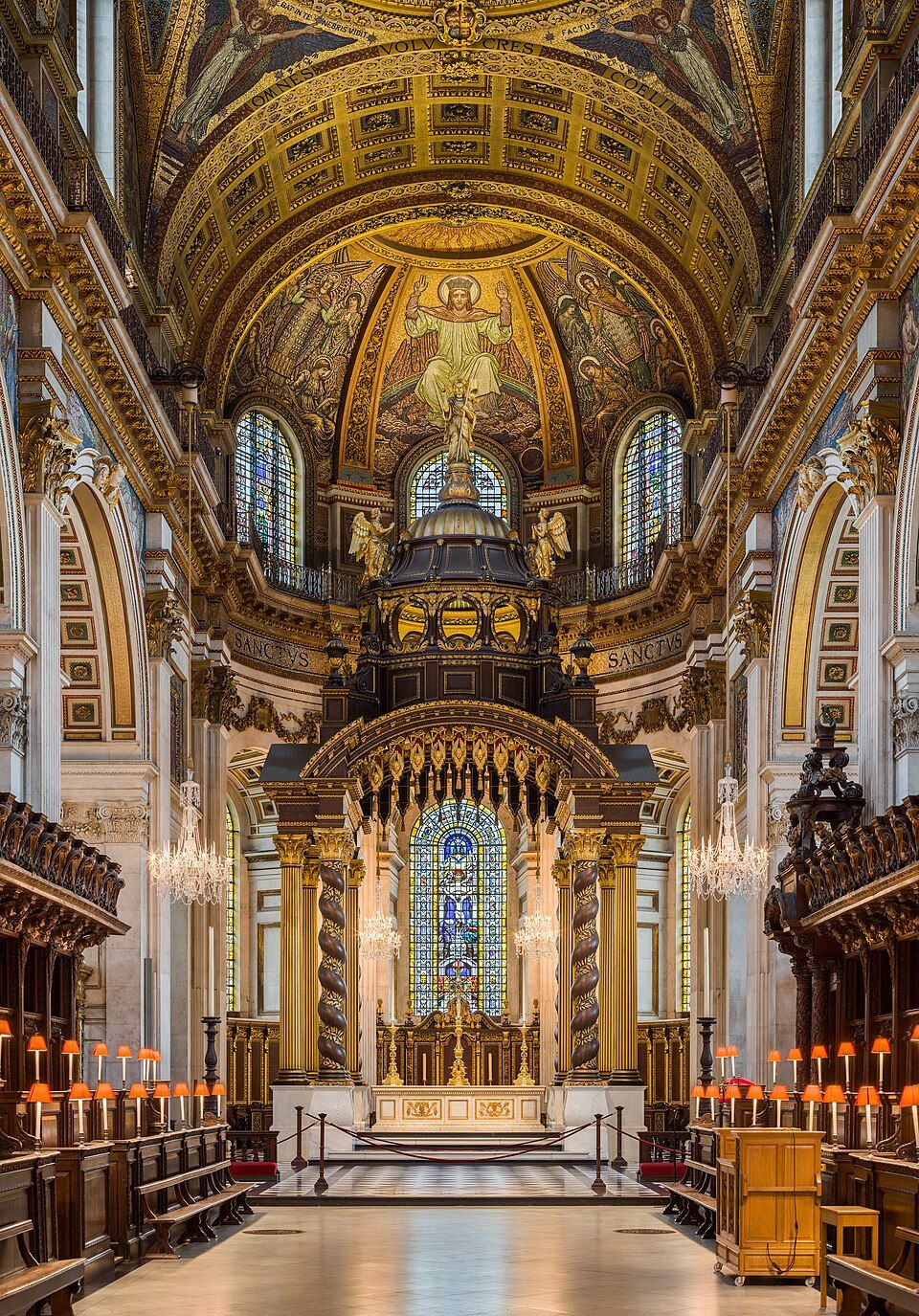
the finest woodcarver in English history — are among the most detailed and beautifully observed wooden carvings ever made. The painted apse ceiling above the high altar depicts scenes from the life of St Paul.
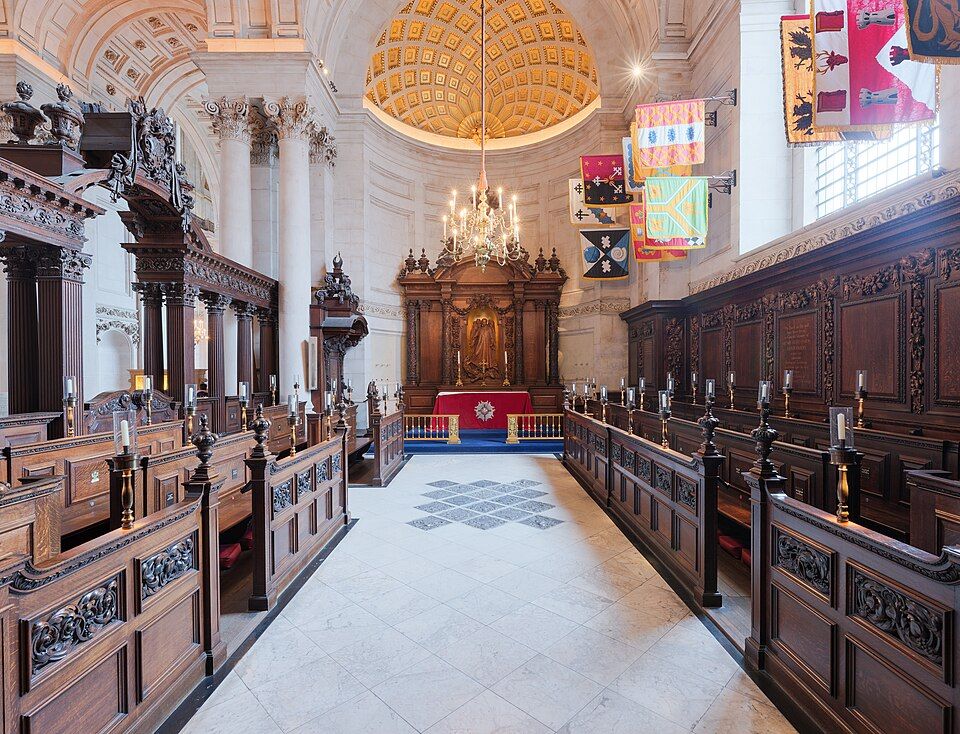
Eastern apse Built after the Second World War to commemorate the 28,000 American servicemen and women based in Britain who died in the war. The roll of honour is on display. The chapel is a small act of gratitude from Britain to America that is easy to miss and impossible to forget.
Top of the dome [OUTDOOR] On clear days the view from 85 metres encompasses the full sweep of London from Canary Wharf to the Houses of Parliament, with the Thames describing a long curve through it all. Wren had this view in mind when he sited the cathedral on Ludgate Hill.
In December 1940, a photographer climbed to a rooftop in the City of London and took a picture of St Paul's dome rising above the smoke of the burning city. The image was published and became, overnight, a symbol of something the British people needed to see: that the fire had not taken everything, that the dome still stood, that there was still something above the flames. That is what cathedrals are for.
“God is our refuge and strength, an ever-present help in trouble.”
Read in full on Bible Gateway →St Paul’s Cathedral, Christopher Wren’s masterpiece on Ludgate Hill, has dominated the London skyline since its consecration in 1697. It replaced the medieval St Paul’s destroyed in the Great Fire of London of 1666, and remains one of the largest cathedral domes in the world at 111 metres — surpassed only by St Peter’s in Rome and the Panthéon in Paris. Approximately 1.7 million people visit each year.
Wren designed everything about the building — from the dome structure (an outer dome, inner dome, and hidden brick cone between them, an unprecedented engineering innovation) to the furnishings. The Whispering Gallery inside the dome — where a whisper against the curved wall can be heard 34 metres away on the opposite side — is one of the engineering curiosities that every visitor tests. The crypt contains the tombs of Wellington, Nelson, and Wren himself, whose epitaph reads simply: Si monumentum requiris, circumspice — If you seek a monument, look around you.
During the Blitz of 1940–41, St Paul’s became the symbol of London’s resistance. The famous photograph of the dome rising above the smoke of burning buildings around it — taken on December 29, 1940 — is one of the most resonant images of the Second World War. Churchill ordered that the cathedral be protected at all costs. Volunteer fire-watchers lived on the roof during the Blitz to extinguish incendiary bombs before they could take hold. The dome survived.