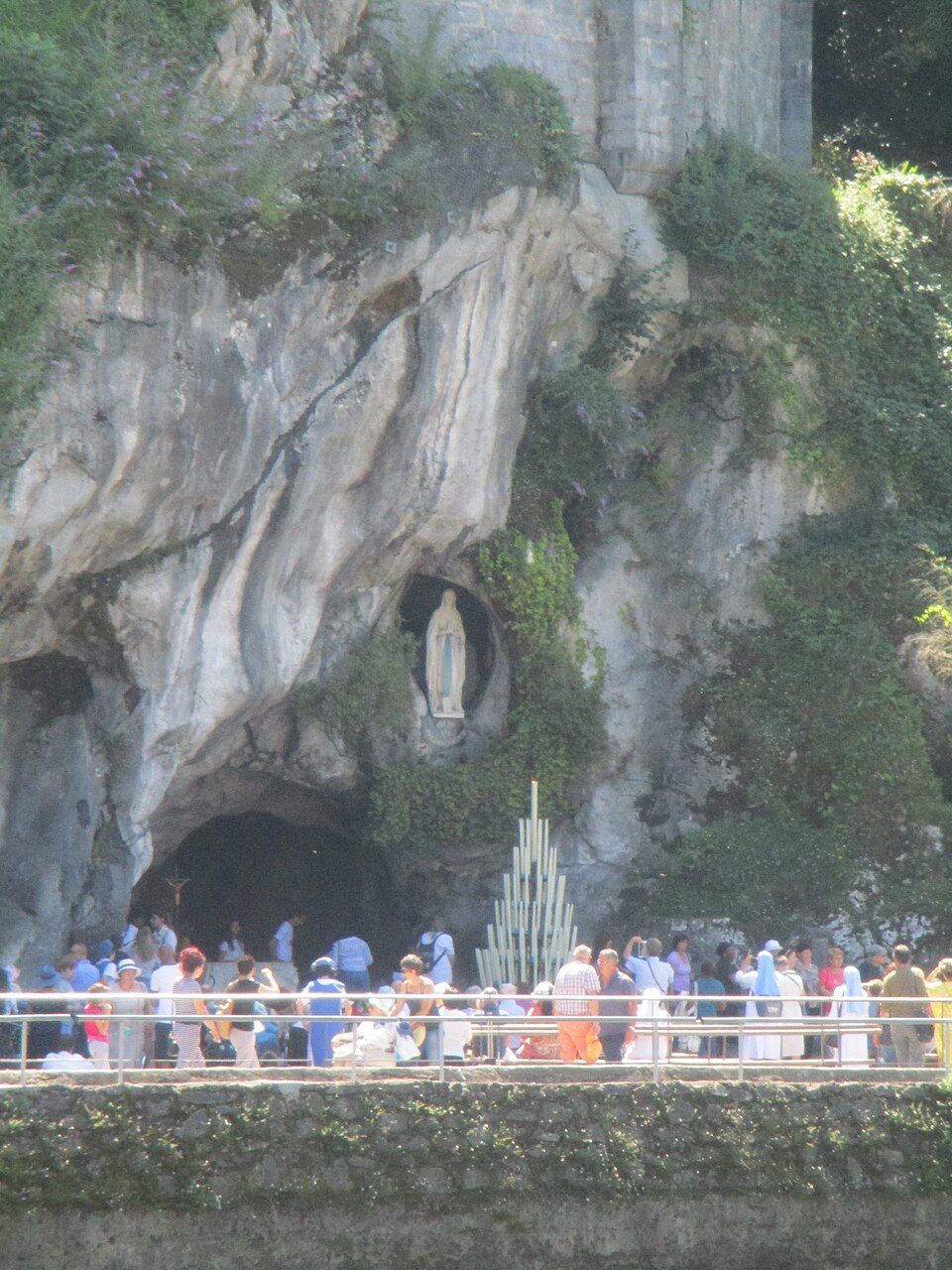
The Grotto of Massabielle
the most intimate contact possible with the site of the apparitions. At night, illuminated by candles, it is achingly beautiful.
 Pilgrimstays
Lourdes is the most famous healing shrine in the Christian world. Since 1858, when the Virgin Mary appeared 18 times to 14-year-old Bernadette Soubirous in a grotto on the banks of the Gave River, approximately 200 million pilgrims have visited. The spring that emerged at Our Lady's instruction during the ninth apparition has been the source of thousands of reported cures, 70 of which have been recognised by the Church as scientifically inexplicable miracles. Bernadette was a poor, asthmatic, uneducated child from a family living in poverty in a former jail cell. The apparition identified herself with the words: I am the Immaculate Conception — a dogma defined just four years earlier, which Bernadette could not have known. The Church undertook a rigorous investigation and declared the apparitions authentic in 1862. Bernadette entered religious life, was canonised in 1933, and her incorrupt body lies at Nevers. The sanctuary complex that has grown around the grotto includes several basilicas, the iconic candlelit processions, the baths where the sick are immersed in spring water, and an elaborate infrastructure to welcome the ill and disabled. The Torchlight Marian Procession each evening, with thousands of pilgrims moving through the darkness carrying candles, is one of the most moving spectacles in modern Catholic life.
Approximately 200 million pilgrims have visited since 1858 — the world's most visited healing
shrine 70 cures have been officially recognised by the Catholic Church as scientifically inexplicable
miracles The Virgin identified herself as the Immaculate Conception — a theological term unknown
to Bernadette The candlelit Torchlight Procession each evening draws thousands of pilgrims through the
darkness The Medical Bureau at Lourdes, staffed by doctors of all faiths, rigorously examines
the most intimate contact possible with the site of the apparitions. At night, illuminated by candles, it is achingly beautiful.
Adjacent to the Grotto Pilgrims are immersed in cold spring water in a private cubicle, assisted by volunteers known as Brancardiers. The water is cold and the experience is brief. Many report profound peace. Over 7 million people have used the baths since they opened.
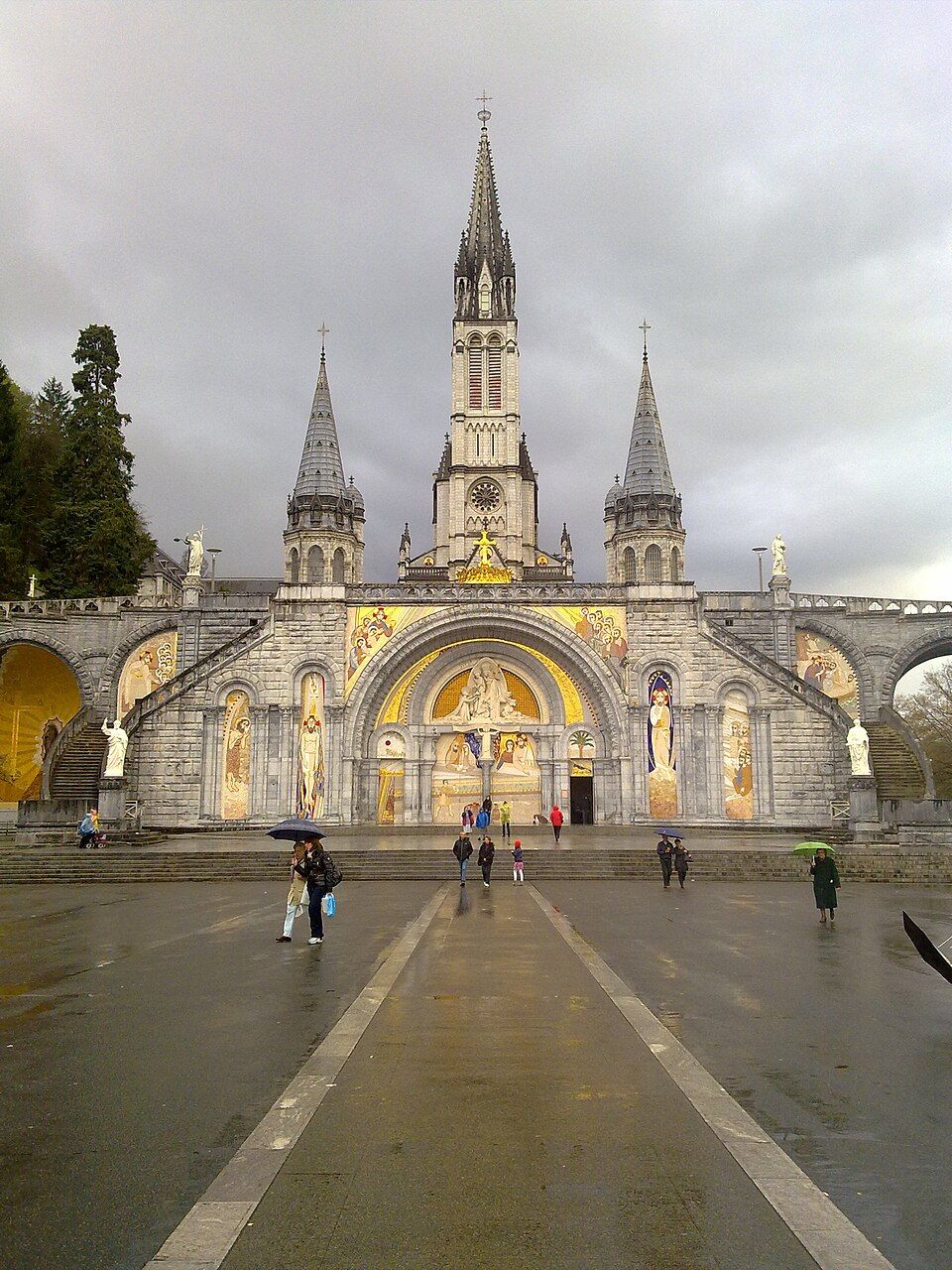
Rosary Esplanade to the Upper Basilica Each evening during the pilgrimage season, thousands of pilgrims assemble at the Rosary Esplanade with lit candles and process to the basilicas singing the Ave Maria. The sight of thousands of candles moving through the darkness, voices rising in the night, is the defining image of Lourdes.
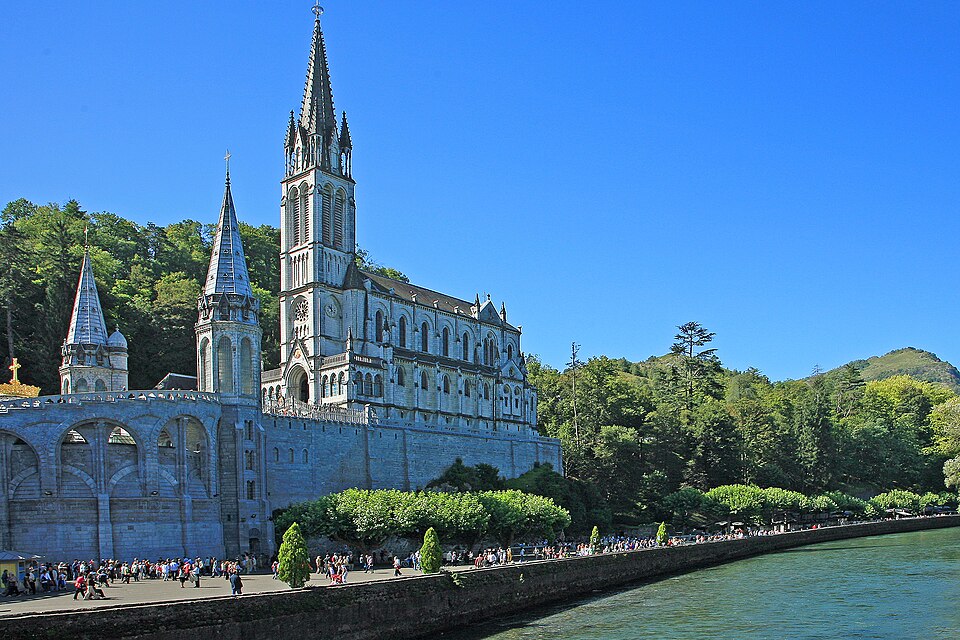
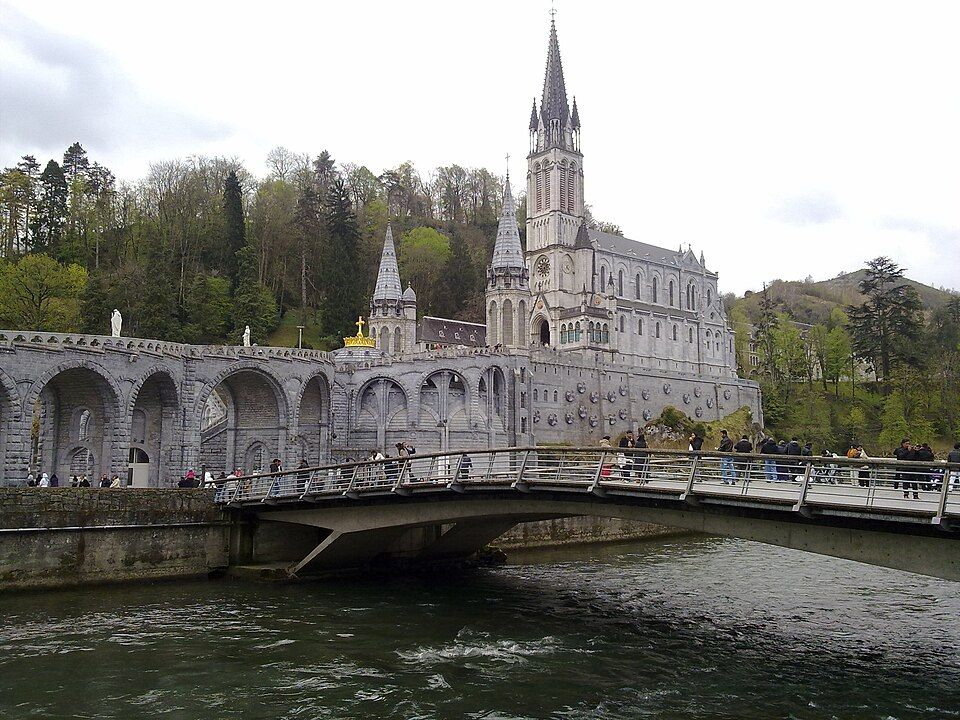
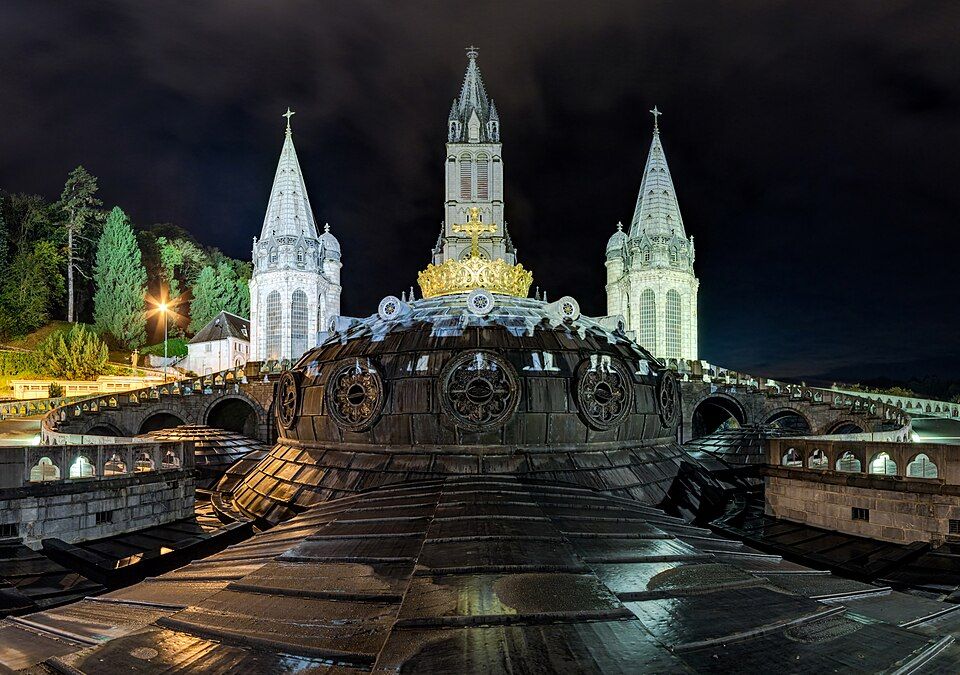
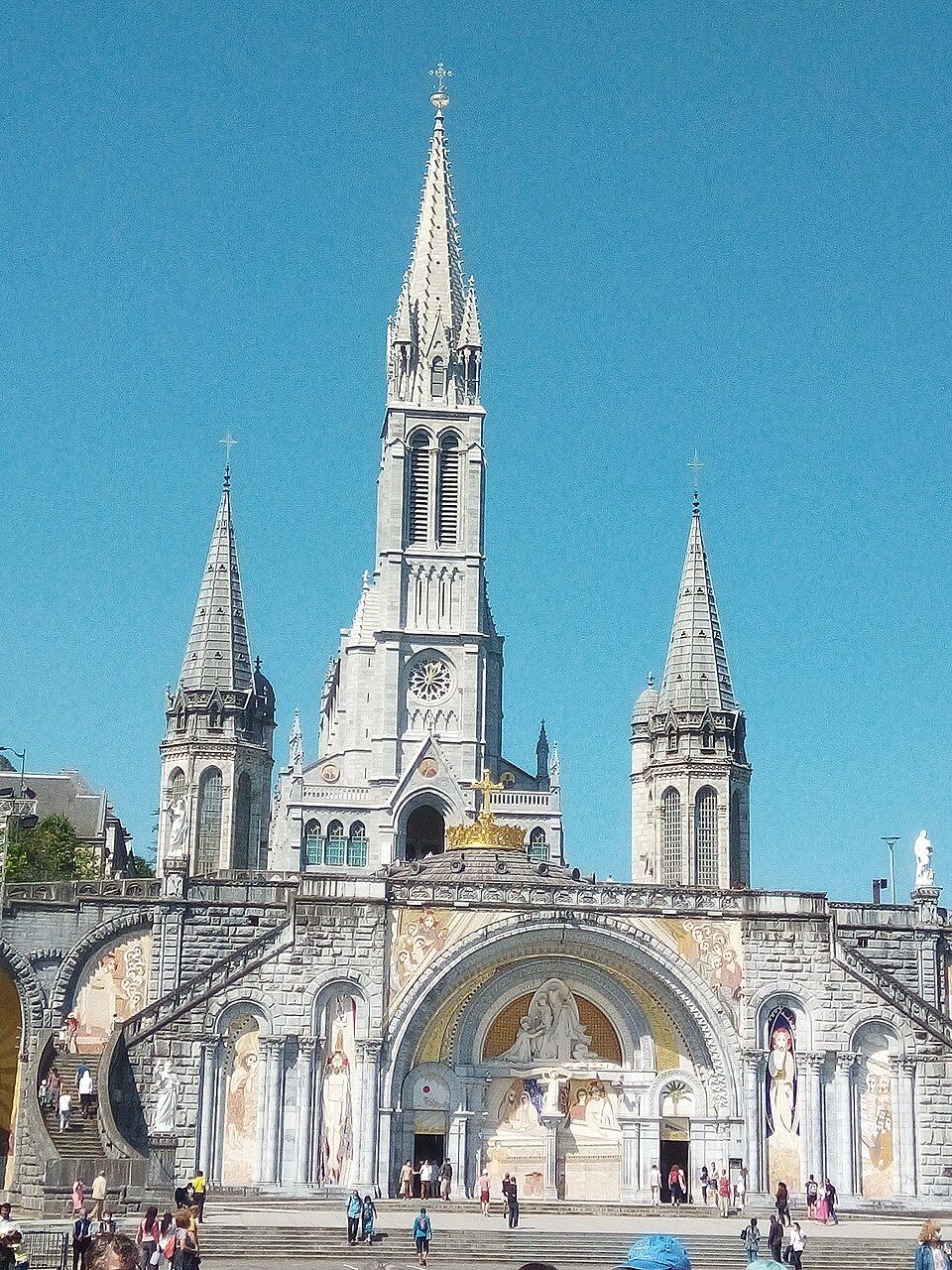
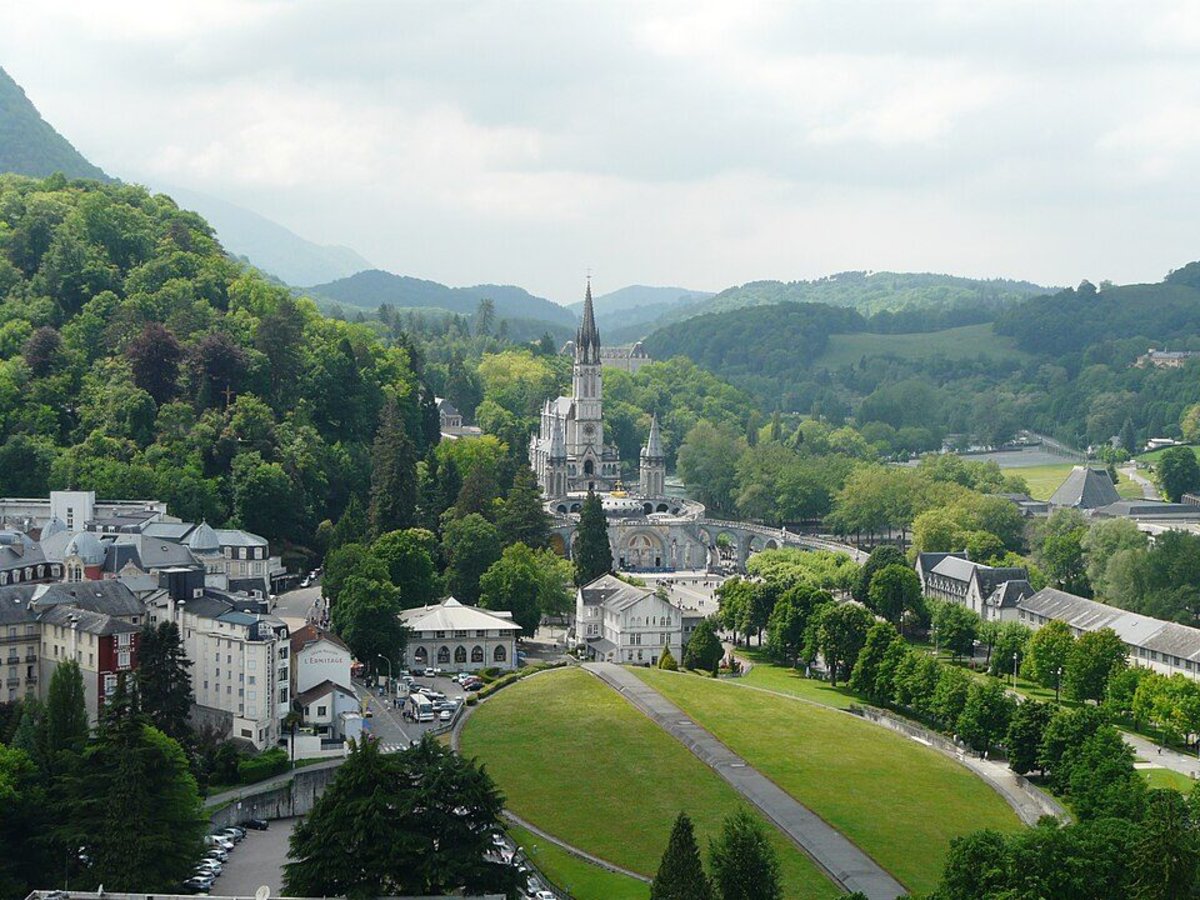
Upper basilica, above the Grotto The first basilica built at Lourdes, completed 1871. Its neo-Gothic interior contains the stained-glass panels depicting the 18 apparitions. The view from the esplanade below, with the basilica rising above the Grotto, defines the landscape of Lourdes.
Sanctuary complex Founded in 1883, staffed by doctors of all beliefs, the Bureau examines claimed cures from Lourdes. No cure is accepted without rigorous medical evidence ruling out natural explanation. Only then does a Church commission examine whether the cure may be attributed to divine intervention. The process is among the most serious systematic investigations of miraculous claims in any religious tradition.
Bernadette was everything the world ignores: poor, sick, uneducated, female, a child. The Virgin appeared to her eighteen times. The Church investigated and declared it authentic. The spring that emerged at Mary's request has drawn two hundred million people. This is the logic of Lourdes: God does not choose the strong, the credentialled, or the respectable. God chooses the poor mill-girl with asthma and lets the world come to her.
“God chose the foolish things of the world to shame the wise; God chose the weak things of the world to shame the strong.”
Read in full on Bible Gateway →Lourdes is the most famous healing shrine in the Christian world. Since 1858, when the Virgin Mary appeared 18 times to 14-year-old Bernadette Soubirous in a grotto on the banks of the Gave River, approximately 200 million pilgrims have visited. The spring that emerged at Our Lady’s instruction during the ninth apparition has been the source of thousands of reported cures, 70 of which have been recognised by the Church as scientifically inexplicable miracles.
Bernadette was a poor, asthmatic, uneducated child from a family living in poverty in a former jail cell. The apparition identified herself with the words: “I am the Immaculate Conception” — a dogma defined just four years earlier, which Bernadette could not have known. The Church undertook a rigorous investigation and declared the apparitions authentic in 1862. Bernadette entered religious life, was canonised in 1933, and her incorrupt body lies at Nevers.
The sanctuary complex that has grown around the grotto includes several basilicas, the iconic candlelit processions, the baths where the sick are immersed in spring water, and an elaborate infrastructure to welcome the ill and disabled. The Torchlight Marian Procession each evening, with thousands of pilgrims moving through the darkness carrying candles, is one of the most moving spectacles in modern Catholic life.