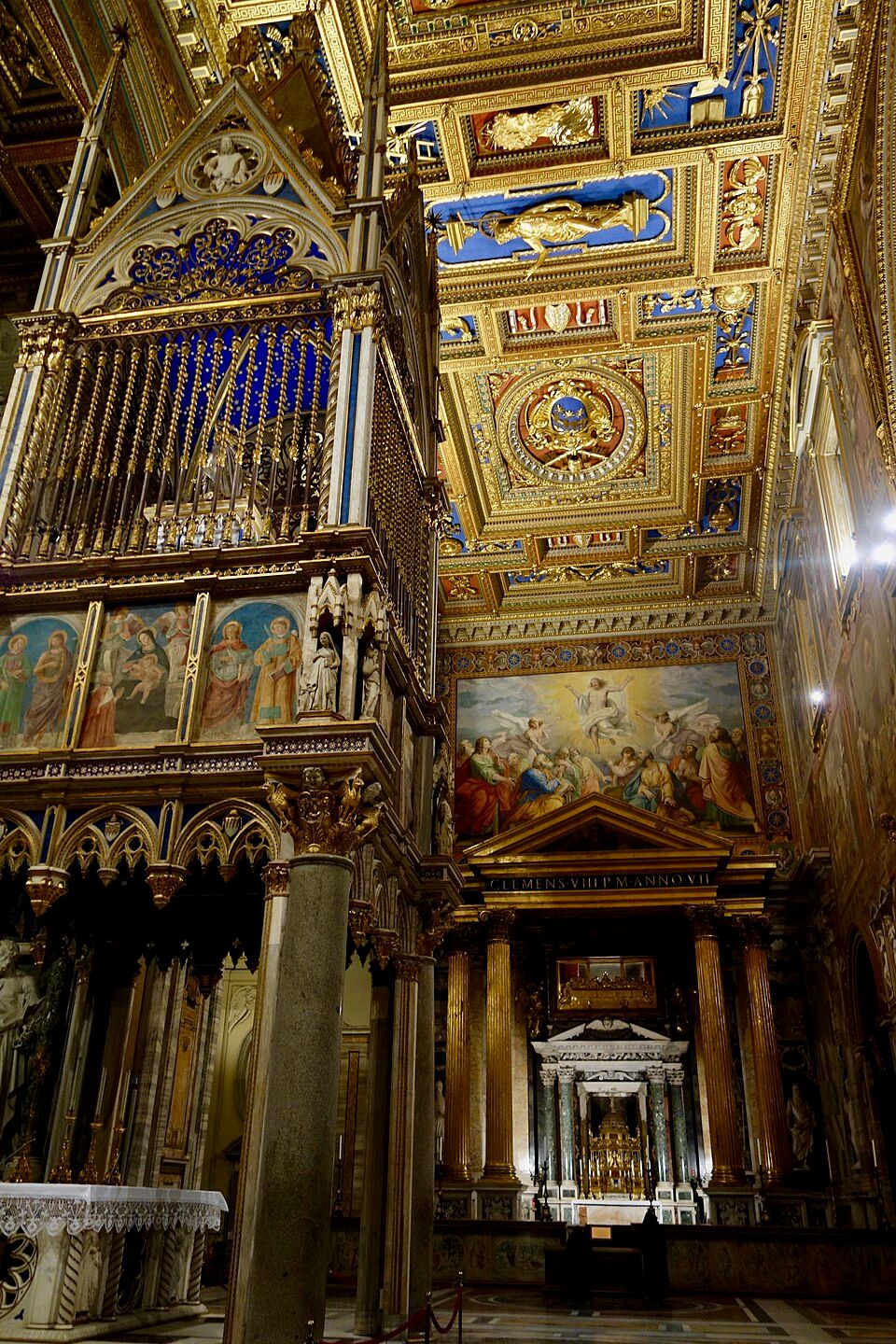
The Papal Altar and Cathedra
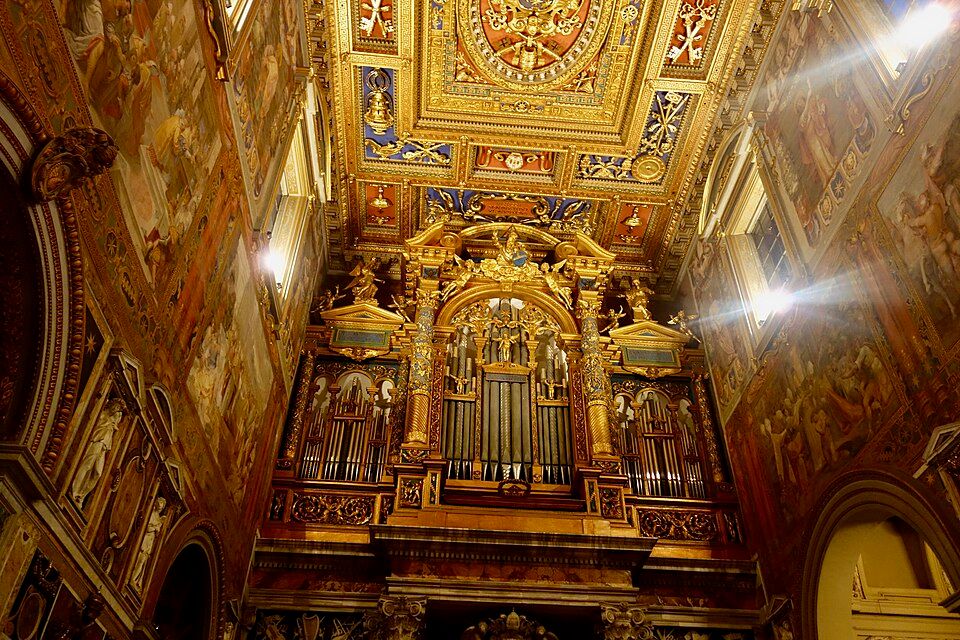
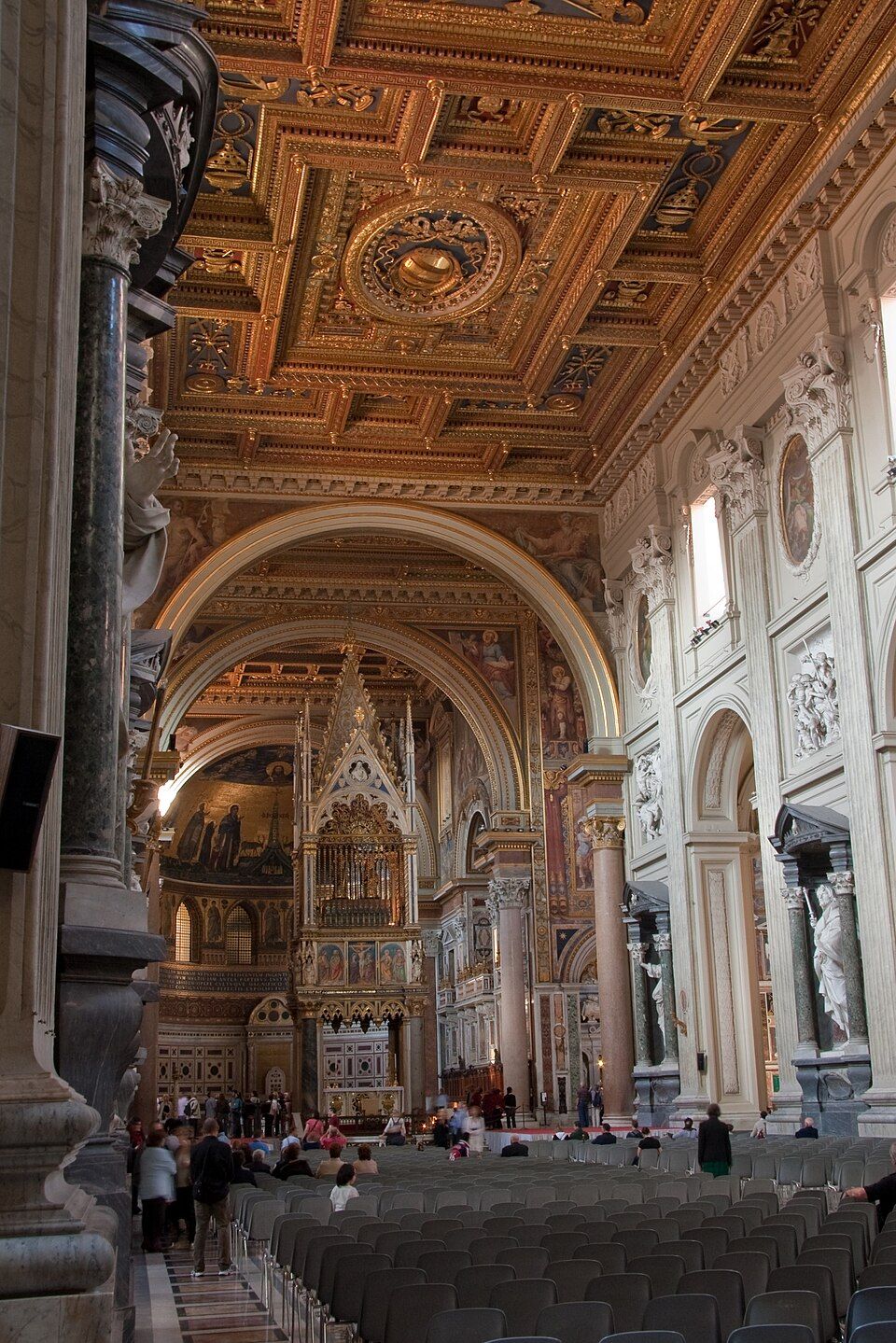
Sanctuary, east end The papal throne and the baldachin (canopy) above the papal altar contain, by tradition, the heads of St Peter and St Paul.
 Pilgrimstays
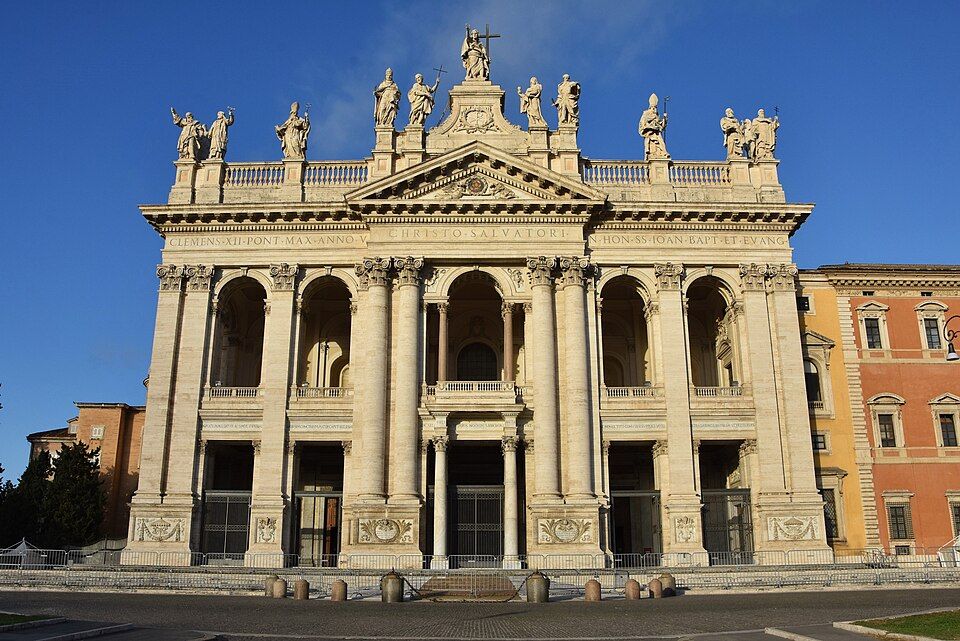
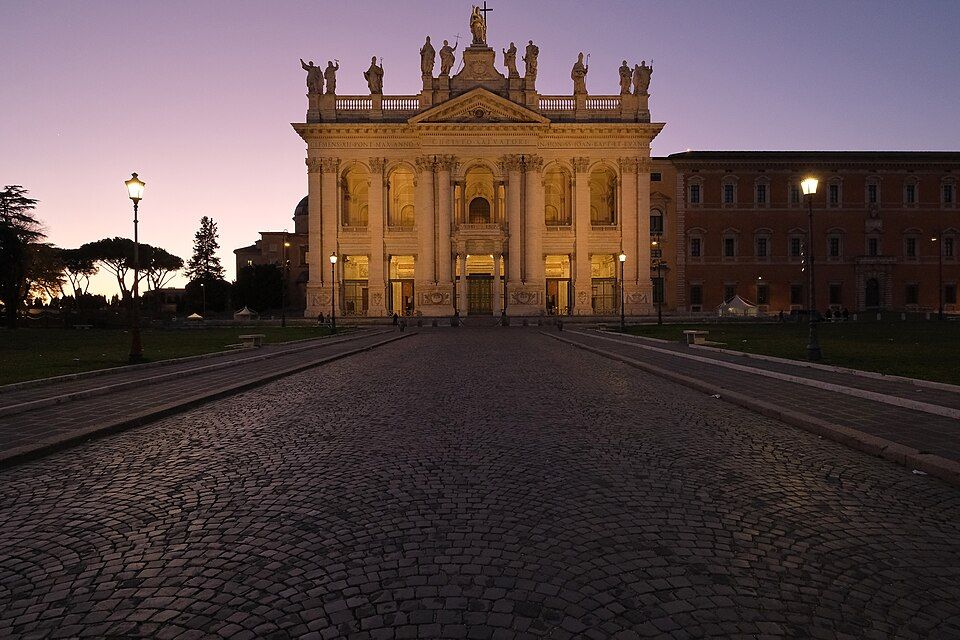
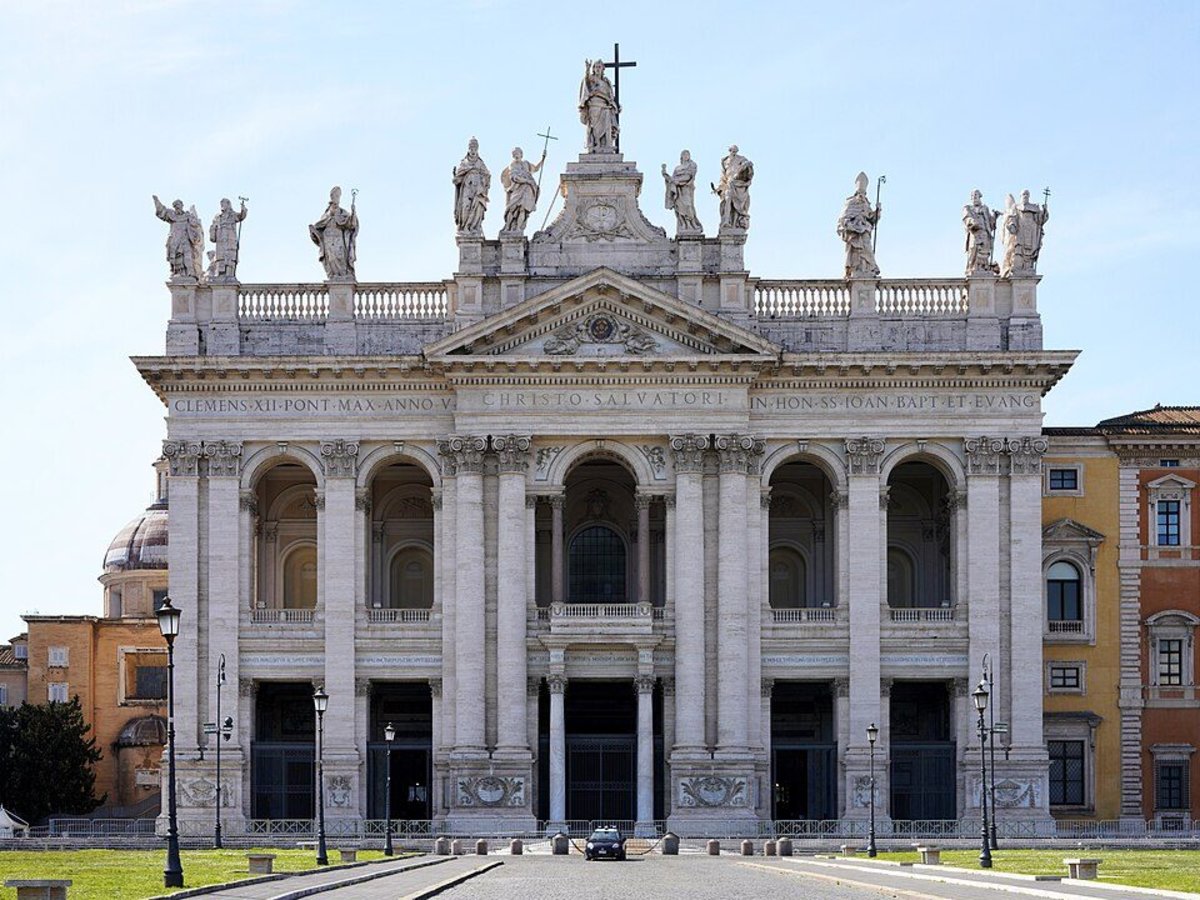
The Archbasilica of the Most Holy Saviour and of Saints John the Baptist and John the Evangelist in the Lateran — known simply as the Basilica of St John Lateran — is the cathedral of Rome, the senior basilica of the Catholic world, and the mother church of all churches in Christendom. Its inscription on the facade reads: Omnium urbis et orbis ecclesiarum mater et caput — Mother and head of all the churches of the city and the world. It is the oldest public church in Rome, consecrated by Pope Sylvester I in 324 AD. The Lateran was the residence of the Popes until the Avignon papacy (1309-1377), and the palaces and buildings surrounding the basilica constitute the original centre of papal power. The Lateran Palace was the most important building in medieval Christendom. Five Ecumenical Councils of the Church were held here. The Scala Sancta — the Holy Stairs traditionally believed to be those that Jesus climbed to Pilate's Praetorium, brought from Jerusalem by St Helena in the 4th century — stand in a building across the piazza and are climbed on the knees by thousands of pilgrims each day. Despite being less visited than St Peter's, the Lateran is theologically and historically more significant as the Pope's cathedral church. On major feasts, Papal Masses are often celebrated here rather than at St Peter's.
The cathedral of Rome and the mother church of all Christendom — more senior than St Peter's Basilica
The oldest public church in Rome — consecrated in 324 AD by Pope Sylvester I Five Ecumenical Councils of the Church were held in the Lateran The Scala Sancta (Holy Stairs), said to have been climbed by Jesus before his crucifixion, are across the piazza The papal throne (Cathedra Romana) is here — the seat from which the Pope governs the universal Church
Sanctuary, east end The papal throne and the baldachin (canopy) above the papal altar contain, by tradition, the heads of St Peter and St Paul.
of the Bishop of Rome, the Pope. When the Pope celebrates Mass here, it is his cathedral Mass, not a visitor's event. The theological significance is immense: this is the mother church.
Eastern apse above the altar The magnificent 13th-century mosaic of Christ blessing, with the Virgin Mary, St Francis of Assisi, and St Anthony of Padua, fills the apse. Below it, the Jordan River, in which the Nile and Tiber fish, expresses the universal reach of the Baptism proclaimed from this church.
the private chapel of the medieval popes, containing a miraculous image of Christ. The sight of pilgrims slowly ascending on their knees is continuous throughout the day. Martin Luther climbed these stairs in 1510; tradition holds that at the top he asked whether it was really possible to earn grace this way. The answer he developed led to the Reformation.
Adjacent to the basilica nave The 13th-century cloister, by the Vassalletto family, is one of the finest examples of Cosmatesque work in Rome. The twisted columns, inlaid marble, and the garden at the centre provide the most peaceful space at the Lateran.
Adjacent to the basilica [OUTDOOR] The oldest Christian baptistery in Rome, built by Constantine in the 4th century, stands adjacent to the basilica. Eight ancient porphyry columns support the domed ceiling.
the font where the Roman church baptises. The chapel of St Venantius contains 7th-century mosaics of extraordinary quality.
Every Catholic church in the world is, in some sense, a daughter of this building. The inscription on the facade says so: Mother and head. In 324 AD, when this church was consecrated, Christianity had been legal for only eleven years. Within a century it would be the religion of the empire. The mother church of Christendom was built in a moment of extraordinary transition — from persecuted minority to imperial religion. What was preserved and what was lost in that transition is still being worked out.
“Built on the foundation of the apostles and prophets, with Christ Jesus himself as the chief cornerstone.”
Read in full on Bible Gateway →The Archbasilica of the Most Holy Saviour and of Saints John the Baptist and John the Evangelist in the Lateran — known simply as the Basilica of St John Lateran — is the cathedral of Rome, the senior basilica of the Catholic world, and the mother church of all churches in Christendom. Its inscription on the façade reads: Omnium urbis et orbis ecclesiarum mater et caput — Mother and head of all the churches of the city and the world. It is the oldest public church in Rome, consecrated by Pope Sylvester I in 324 AD.
The Lateran was the residence of the Popes until the Avignon papacy (1309–1377), and the palaces and buildings surrounding the basilica constitute the original centre of papal power. The Lateran Palace was the most important building in medieval Christendom. Five Ecumenical Councils of the Church were held here.
The Scala Sancta — the Holy Stairs traditionally believed to be those that Jesus climbed to Pilate’s Praetorium, brought from Jerusalem by St Helena in the 4th century — stand in a building across the piazza and are climbed on the knees by thousands of pilgrims each day. Despite being less visited than St Peter’s, the Lateran is theologically and historically more significant as the Pope’s cathedral church. On major feasts, Papal Masses are often celebrated here rather than at St Peter’s.