Louvre Museum
Paris, France
"The Louvre is the most visited museum in the world, with 8.7 million visitors in 2024."
Highlights
- 1The world's most visited museum — 8.7 million visitors in 2024 Contains Leonardo da
- 2Vinci's Mona Lisa, the most famous painting in the world The Grande Galerie of
- 3Italian paintings is arguably the greatest single room of religious art in the world
- 4Veronese's Wedding at Cana, 10 metres wide, faces the Mona Lisa across the same
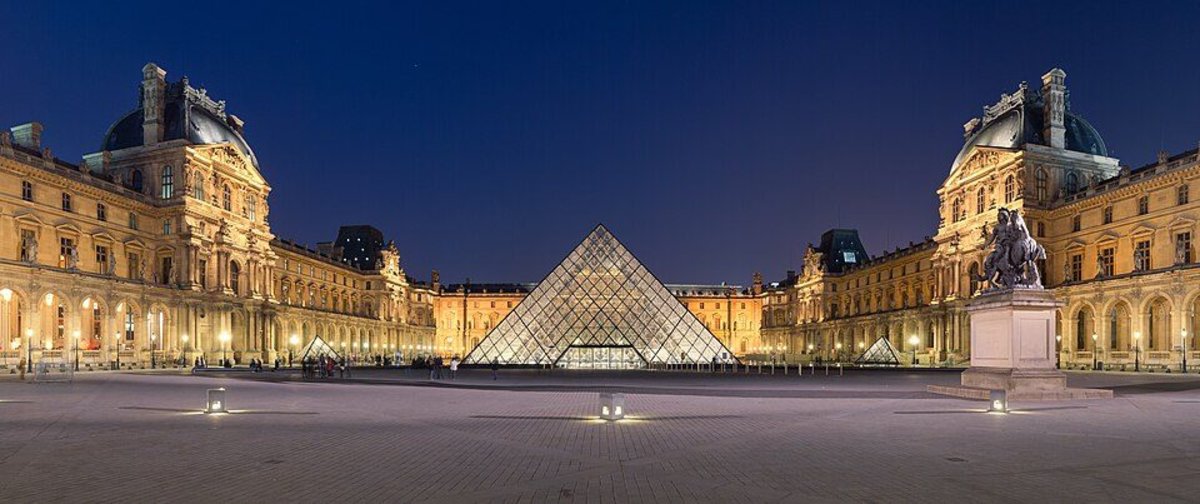
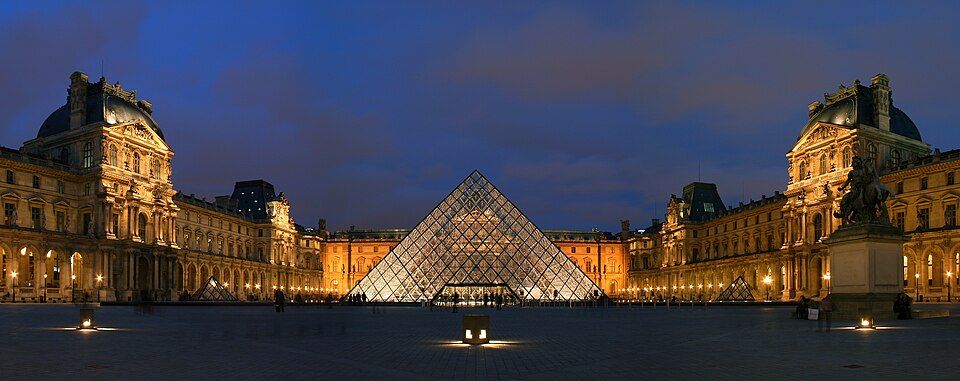
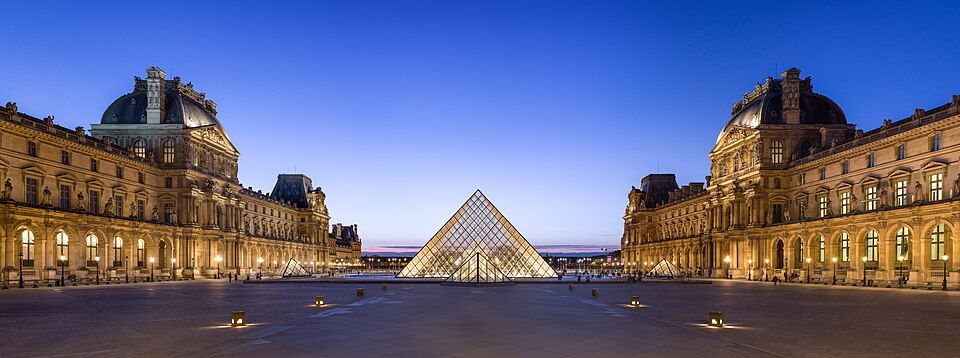
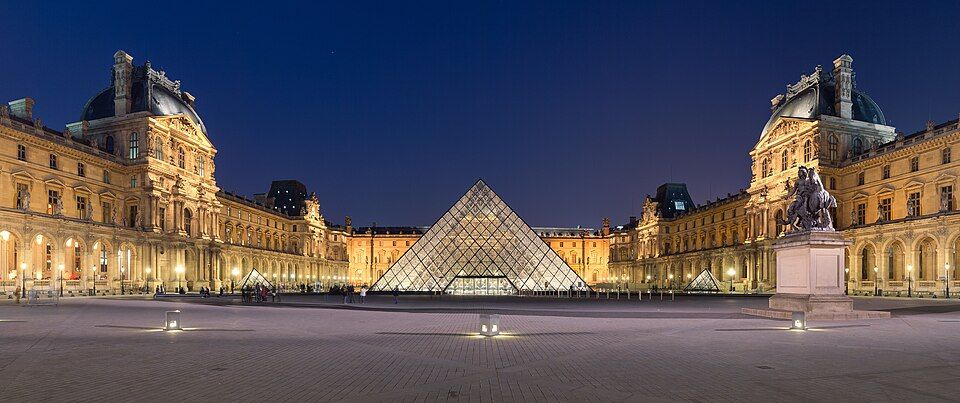
- 5room I.M. Pei's 1989 glass pyramid resolved decades of architectural debate and became a
Getting There
Address
Rue de Rivoli, 75001 Paris, France
Directions
Metro Line 1 or 7 to Palais Royal-Musée du Louvre. Bus 21, 27, 39, 95. Entry via the Pyramid in the Cour Napoléon or via the Carrousel or Richelieu entrance. Pre-booked tickets are essential — queues for Mona Lisa alone can be 40 minutes.
Timings
Current time — Paris Time (CET)
--:--:--
| When | Hours |
|---|---|
| Museum | 9:00 AM - 6:00 PM |
First Friday of month Extended evening hours free for under 26 Pre-booking is mandatory; timed entry tickets sold online. Mona Lisa crowds peak mid-morning; the Grande Galerie and Veronese room are less crowded in early morning or late afternoon. Free entry under 18 and EU residents under 26.
Masses & Events
Visit Structure
Allow 3 hours minimum for core highlights; full collection requires days
Self-guided or guided tours available
Temporary Exhibitions
Check schedule at louvre.fr
Major international exhibitions several times yearly Friday/Wednesday
Evening
Open until 9:45 PM
Least crowded time to visit — the galleries empty significantly
Must See
The Denon Wing
Grande Galerie and Italian Paintings
Denon Wing, First Floor The 460-metre Grande Galerie is the longest gallery in the Louvre and the heart of its Italian collection: Leonardo, Raphael, Titian, Caravaggio, Veronese, and hundreds of others. For Christian pilgrims, this is the most important single space — a sustained encounter with the sacred represented in paint across four centuries. Budget 45 minutes minimum.
The Wedding at Cana by Veronese
Denon Wing, Room 711 The largest painting in the Louvre
10 metres wide, 6.7 metres tall — faces the Mona Lisa across Room 711. It depicts Christ's first miracle at Cana, with 130 figures in a 16th-century Venetian setting. Ignored by the crowds fixating on the opposite wall, it is the greater painting.
Leonardo da Vinci Collection
Denon Wing, Rooms 710-711 The most concentrated collection of Leonardo anywhere in the world: Virgin of the Rocks, St John the Baptist, Annunciation, La Belle Ferronnière, and of course the Mona Lisa. Seeing them together communicates what no reproduction can: the quality of Leonardo's seeing.
Medieval Louvre Foundations
Lower ground floor, Sully Wing The original 12th-century fortress built by Philippe Auguste is preserved in the basement. Walking through these medieval foundations beneath a 17th-century palace, entered through a 20th-century glass pyramid, is the compressed history of Western civilisation in physical form. The Cour Carrée
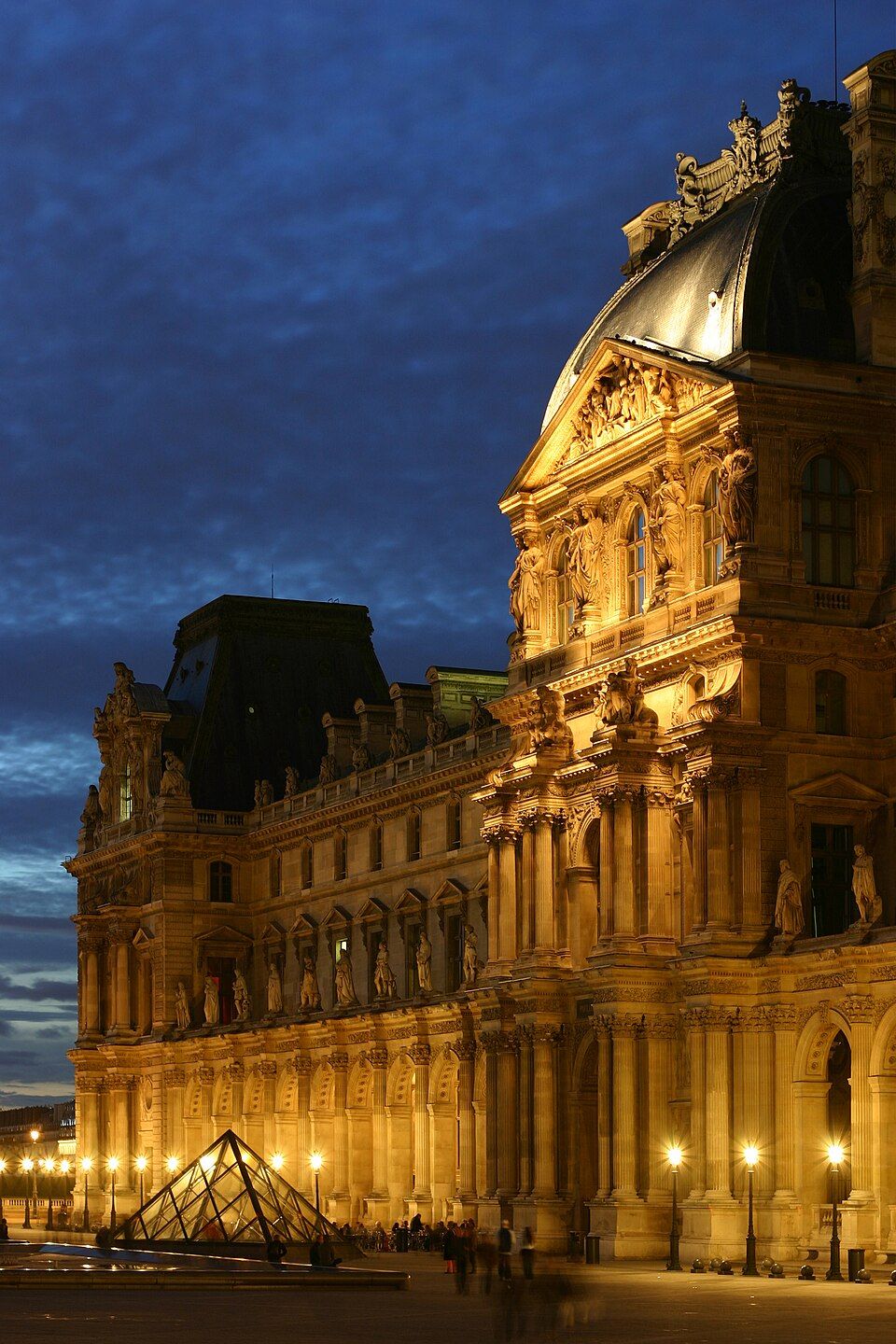
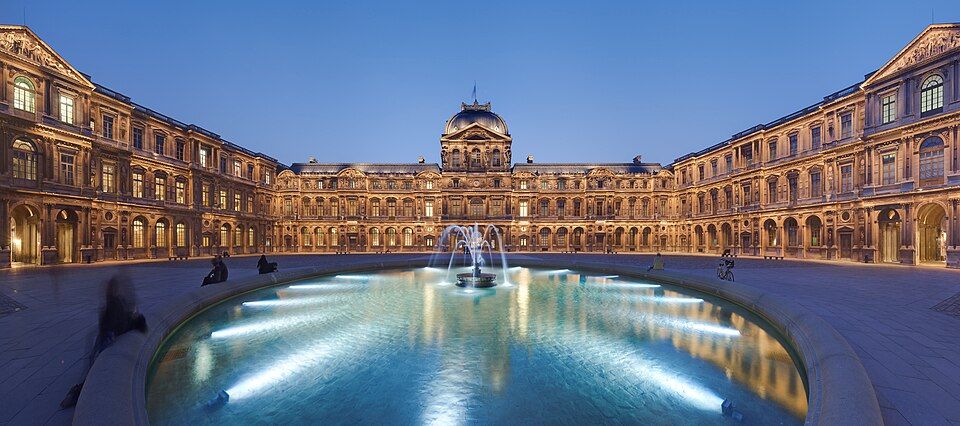
Exterior courtyard [OUTDOOR] The 16th-17th-century royal palace facade surrounding the eastern courtyard is one of the finest architectural spaces in Paris. At dawn before the museum opens, when the courtyard is empty and the stone glows pale gold, it is overwhelming.
The history of France
its kings, its revolutions, its grandeur and its contradictions
is written on these walls.
Intentions
Carry these intentions into the Basilica with you — pause at each sacred spot and lift them to God.
For all who seek God in beauty and find the sacred in great art
For the artists who dedicated their lives to representing the divine in paint and marble
For the preservation of cultural heritage for all humanity
For those who experience awe in museums but feel nothing in churches — that the gap may narrow
For the peoples of France, and their long complicated relationship with the faith that built so much they love
For museum workers, curators, and conservators who protect what others have made
For children experiencing great art for the first time
For a sense of the sacred that can survive secularism
Reflection
The Mona Lisa is smaller than most people expect. The crowd in front of her is large, noisy, and mostly composed of people photographing her on their phones. And yet she is still there when they leave — the same face, the same ambiguous smile, the same eyes that seem to follow whoever stands before them. Five hundred years of people have stood where you are standing. This is what the secular world now does with sacred art: it makes pilgrimage to it, photographs it, and goes home changed in ways it cannot explain.
Suggested Scripture — Proverbs 8:30
I was filled with delight day after day, rejoicing before him always.
Read in full on Bible Gateway →A Pilgrim's Prayer
Lord of all beauty, let me receive whatever truth is in this extraordinary accumulation of human making. Let the devotion that moved artists to spend years on religious panels and altarpieces reach me through the paintings they left. And let me understand that every act of making something beautiful is, at its source, an act of faith in a universe worth beautifying. Amen.
More
The Louvre is the most visited museum in the world, with 8.7 million visitors in 2024. Its collection of over 550,000 works spans from 7,000 BC to the mid-19th century and contains some of the most consequential works of Western Christian art — the Winged Victory of Samothrace, the Venus de Milo, Raphael’s La Belle Jardinière, Veronese’s enormous Wedding at Cana, Delacroix’s Liberty Leading the People, and Leonardo da Vinci’s Virgin of the Rocks.
Renaissance Religious Art
For Christian pilgrims and art pilgrims, the Louvre’s Denon Wing offers one of the great concentrations of Renaissance religious art in the world: the Italian painting gallery contains Mantegna’s St Sebastian, Perugino’s Apollo and Marsyas, Raphael’s Holy Family, Titian’s Man with a Glove, and in the Grande Galerie running the full length of the wing, hundreds of Italian, French and Flemish works from the 13th to the 17th centuries.
The Palace and the Pyramid
The Louvre is housed in a former royal palace that itself constitutes a work of art: the 16th- and 17th-century Cour Carrée, the grand apartments, the medieval foundations of the original 12th-century fortress (visible in the basement), and I.M. Pei’s 1989 glass pyramid, which resolved a century of architectural controversy and became one of Paris’s most beloved modern additions. In an era when fewer Europeans worship in churches, the Louvre functions as a secular place of pilgrimage — where people make long journeys to stand before images of the sacred.
Photo Gallery
5 photosKey Facts
- Type
- Museum
- Region
- Other
- Location
- Paris, France
Open in Google Maps
Rue de Rivoli, 75001 Paris, France
Pilgrim's Note
We encourage all visitors to enter in a spirit of prayer and respect for the faith traditions of each place.